





Endotoxin Control for Embolic Materials: Raw Material Selection and Contamination Prevention
October 26, 2026
Embolic materials block blood flow in a target vessel and are now central to cerebrovascular treatment and interventional radiology (IVR). Development is also shifting worldwide toward absorbable (biodegradable) embolic materials, which break down in the body and allow healthy tissue to reperfuse.
These materials work inside blood vessels and deliberately starve local tissue of blood, so physical performance alone is not enough. Particle size and injectability matter, but so do the endotoxins carried in by the raw materials, which can drive excessive inflammation and unnecessary tissue necrosis.
Below, we examine the main types of embolic materials, where development is heading, and what each treatment area demands. We then discuss how endotoxins affect clinical safety, what the U.S. Food and Drug Administration (FDA) limits require, how to prevent contamination during development and manufacturing, and what to look for when selecting low-endotoxin materials.
What Are Embolic Materials?
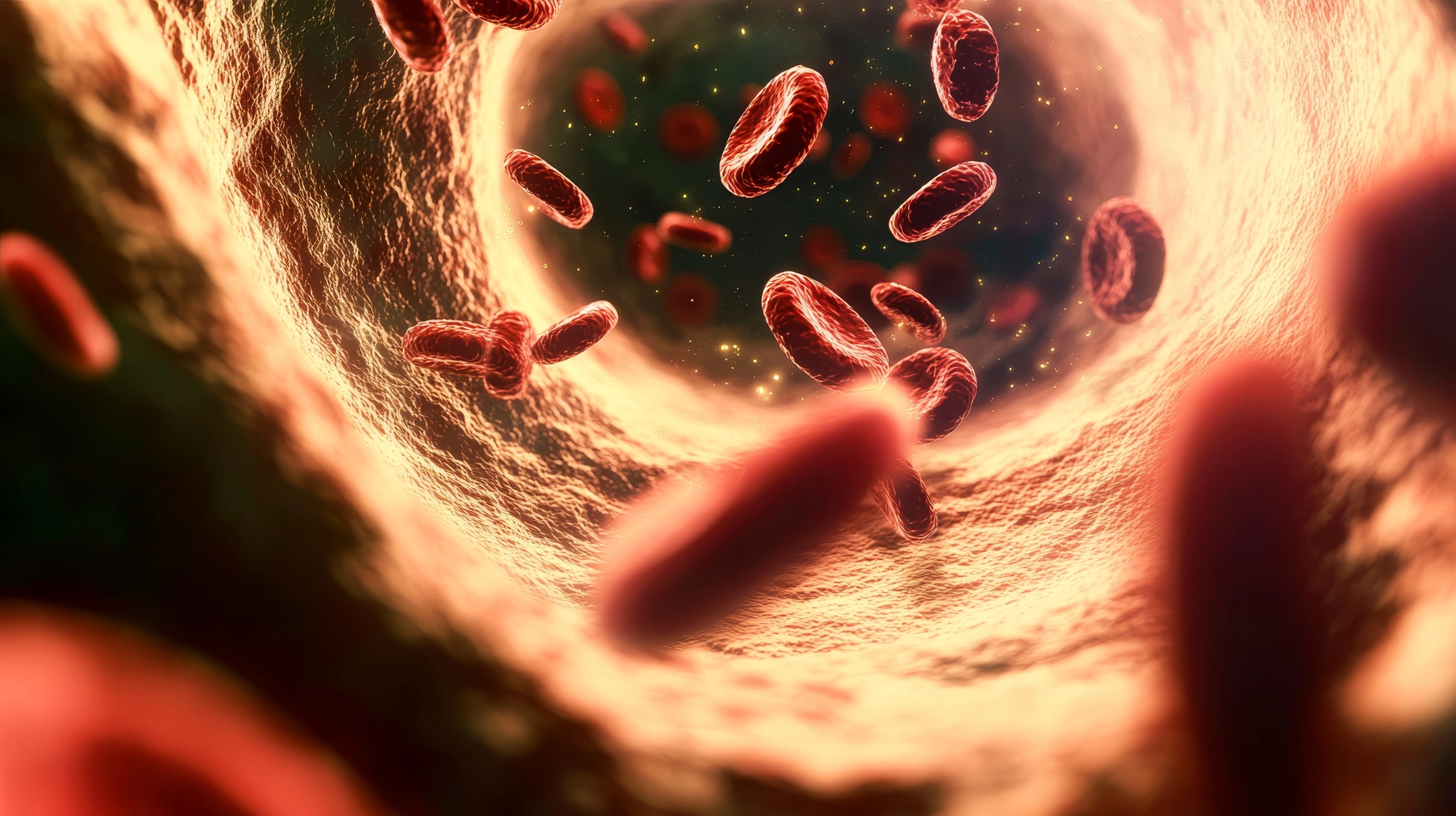
An embolic material is inserted or injected into a blood vessel to block blood flow to a target site. The most common uses include cutting off the blood supply to a tumor, stopping bleeding, and treating vascular malformations.
Embolic materials come as particles, sponges, gels, and liquids. Each is designed for its intended use, balancing particle size, injectability, swelling behavior, degradability, and the required duration of vessel occlusion. Since the material remains inside a blood vessel, performance is only half the picture: impurities and endotoxins in the raw materials must be controlled just as carefully.
Types of Embolic Materials: By Duration and Delivery Form
Embolic materials are grouped in two ways: by how long they keep the vessel occluded and by the form in which they are delivered.
| Category | Type | Key characteristics and uses | Representative materials and forms |
|---|---|---|---|
| Duration of effect | Temporary/absorbable (biodegradable) agents | Degrade enzymatically or hydrolytically after treatment, allowing the vessel to reperfuse | Gelatin, alginate, polysaccharide hydrogels |
| Permanent agents | Block blood flow permanently | Polyvinyl alcohol (PVA) particles, acrylic microspheres, metal coils | |
| Delivery form | Particles and microspheres (beads) | Reach peripheral vessels through a catheter for precise occlusion | Spherical beads, irregular particles |
| Sponge and powder forms | Occlude larger vessels and provide rapid hemostasis during surgery | Pressed sponge, porous powder | |
| Liquid agents (in situ gelling or precipitating) | Conform to and fill complex anatomy and the voids of arteriovenous malformations | Cation-reactive gels, solvent-precipitating polymers |
Why Absorbable Embolic Materials Are Gaining Attention
Across the medical device and biomaterials fields, absorbable (biodegradable) embolic materials—those that the body can safely break down and clear—are steadily gaining ground.
Permanent agents such as PVA particles and acrylic microspheres have long been the standard because they provide reliable occlusion. However, clinicians and regulators have identified several drawbacks inherent to this approach:
Chronic foreign-body reaction and tissue damage: Nondegradable material that remains permanently in the vessel can drive persistent inflammation, granuloma formation, and excessive damage to the vessel wall.
Irreversible necrosis from nontarget embolization: Particle clumping and inconsistent fines—a known cause of past FDA recalls—can send material into healthy tissue or peripheral vessels, where blood flow never returns and the tissue dies.
Limited retreatment options: In procedures such as transarterial chemoembolization (TACE) for liver cancer, the vessel remains blocked, making repeat intervention at the same site difficult.
Absorbable materials help avoid these risks, which is where much of their clinical value lies.
Key clinical benefits of absorbable embolic materials
Protection of healthy tissue: Once the treatment window has passed, the base material hydrolyzes or degrades enzymatically, and the vessel reperfuses, minimizing the risk of irreversible necrosis.
Repeat treatment is possible: Because the vascular architecture is preserved, a recurrence can be treated through the same approach, as in repeat TACE.
Expansion into new indications: Demand is increasing in areas where neither extensive necrosis nor a permanent implant is acceptable, including uterine artery embolization (UAE), prostatic artery embolization, and transarterial embolization for chronic knee pain.
As a result, biodegradable biomaterials that the body can safely metabolize and absorb—including sodium alginate, gelatin, and other polysaccharides—are seeing wider adoption.
There is a catch, however. As these materials degrade, they can gradually release any endotoxin they contain, making high-purity, low-endotoxin grades a prerequisite rather than an option.
Main Treatment Areas and Clinical Goals
Physical and safety requirements vary depending on the treatment area.
| Clinical area | Typical conditions and applications | Key Roles of the Embolic Material |
|---|---|---|
| Oncology (IVR) | Liver cancer (TACE), kidney cancer | Occlude the tumor's feeding vessels to starve it while retaining chemotherapy at the treatment site |
| Neurosurgery | Cerebral aneurysms, arteriovenous malformations (AVM) | Seal tiny voids and aneurysm sacs in the cerebral vasculature to prevent rupture |
| Obstetrics, gynecology, and emergency care | Uterine fibroids (UAE), postpartum hemorrhage, traumatic bleeding | Occlude the target artery rapidly to achieve reversible or emergency hemostasis |
Common Materials Used in Embolic Applications
Embolic materials come from a wide range of sources, including marine- and plant-derived materials, animal-derived materials, synthetic polymers, and formulations delivered as liquids.
Sodium Alginate
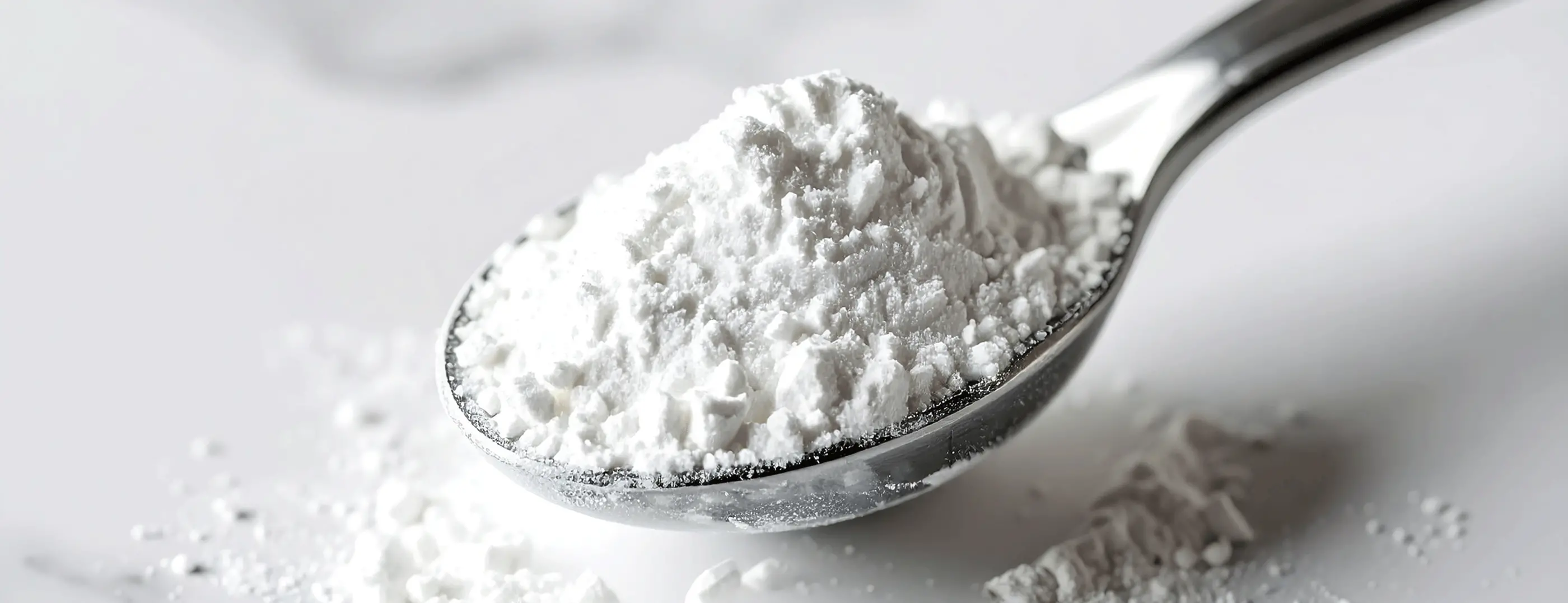
Sodium alginate is a water-soluble polysaccharide derived from brown seaweed. It gels on contact with calcium ions in the body (in situ gelation), making it well suited for bead and hydrogel designs.
Gel strength and the rate of degradation in the body depend on tight control of molecular weight, viscosity, and the mannuronic acid to guluronic acid (M/G) ratio.
Related page: sodium alginate article
Gelatin

Gelatin is a protein obtained by partially hydrolyzing collagen.
It is highly biocompatible and readily broken down by enzymes, with a long clinical track record as a temporary (absorbable) embolic material in both water-swelling sponge and particle forms. By adjusting jelly strength, molecular weight, and the degree of crosslinking, developers can fine-tune how long the material remains in the body.
Related page: the gelatin article
PVA and Synthetic Polymers
PVA is one of the most widely used synthetic polymers in embolic materials. It is strong, elastic, and compressible, and processes easily into particles of uniform size and shape.
Polysaccharide Materials
Besides alginate, this group includes xanthan gum, pullulan, hyaluronic acid, and carboxymethyl cellulose (CMC).
These materials are used to tune the viscosity of liquid embolics and particle suspensions, keep particles from settling, form self-healing hydrogels, and enhance tissue adhesion. Because many are fermentation derived or naturally derived, the source material and degree of purification are just as important as their function in medical applications.
Endotoxins: The Impurity to Watch in Embolic Materials
Embolic materials are placed directly into the bloodstream, so any impurity can affect both safety and product quality. Endotoxin introduced through the raw materials or the manufacturing process is a particular concern with natural, animal-derived, and fermentation-derived materials.
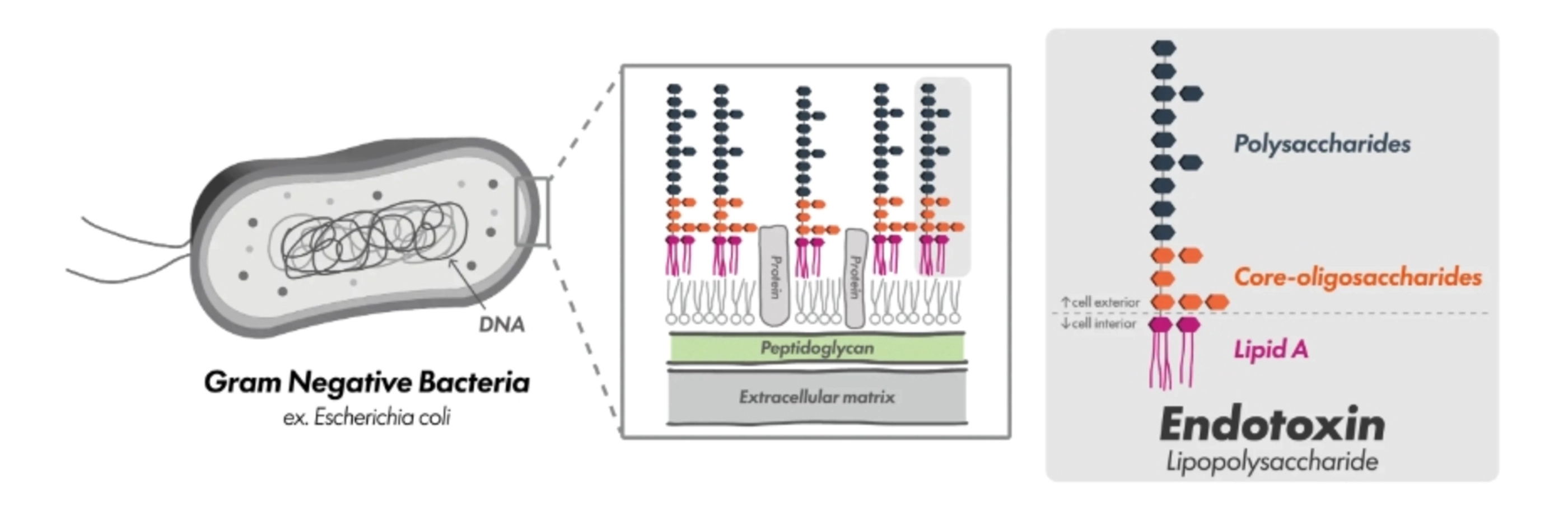
Endotoxins are lipopolysaccharides found in the outer membrane of Gram-negative bacteria. Even trace amounts entering the body can trigger fever and an exaggerated immune and inflammatory response.
They are also extremely heat stable: routine autoclaving and gamma irradiation do not destroy them. Sterilizing the finished product is therefore not enough. Endotoxin levels have to be monitored from the raw material stage, with control limits set according to the intended use.
How Endotoxins Affect Embolic Materials Used in Blood Vessels
Endotoxin introduced through the raw materials does more than cause fever and inflammation; it also complicates safety testing and quality control.
| Risk or scenario | Underlying mechanism | Impact on clinical use and development |
|---|---|---|
| Delayed release from absorbable agents | As the biodegradable polymer hydrolyzes and is metabolized, endotoxin trapped inside is exposed gradually | Ongoing local irritation or a delayed inflammatory flare can occur weeks to months after the procedure as the material breaks down |
| Sterile abscess in ischemic tissue | In the closed, ischemic environment created by vessel occlusion, even trace amounts of endotoxin overstimulate macrophages and neutrophils | An acute sterile abscess or excessive local necrosis develops despite the absence of infection |
| More severe post-embolization syndrome | Endotoxin-driven cytokine production (TNF-α, IL-6, and others) amplifies the fever and pain that commonly follow TACE or UAE | High fever, severe local pain, and systemic inflammation can significantly worsen the patient's recovery |
| Noise in evaluation testing (false positives) | Inflammation caused by endotoxin contamination confounds the biological response to the material itself | In vitro cell assays and in vivo preclinical studies no longer provide a clear assessment of the material's true safety and biocompatibility |
FDA Limits and the Cases Behind Them
The FDA sets extremely strict endotoxin limits for intravascular devices in its Class II Special Controls Guidance Document: Vascular and Neurovascular Embolization Devices and related guidance on endotoxin testing.
Vascular devices: <0.5 EU/mL (or <20 EU/device)
Neurovascular devices: <0.06 EU/mL (or <2.15 EU/device)
The neurovascular limit is approximately one-eighth of the general vascular limit, reflecting how close these devices are to the central nervous system and cerebrospinal fluid.
These limits are not merely theoretical. Microcatheters and delivery systems used in endovascular procedures have been pulled from the market in Class II recalls after failing limulus amebocyte lysate (LAL) testing because endotoxin was introduced during manufacturing or sterilization. In addition, trace residual endotoxin has been linked to adverse events such as aseptic meningitis.
Raw material control is therefore essential—not only for the delivery hardware but also for the embolic material itself, which remains in the vessel as it degrades.
Preventing Endotoxin Contamination in Development and Manufacturing
Keeping endotoxin out requires controls at every stage: raw material selection, manufacturing, product design, and testing.
For materials intended for use in the bloodstream, quality depends on controlling impurities in the raw materials and intermediate stages, not just in the finished product.
Raw Material Stage
Start with a low-endotoxin grade and track the endotoxin level of every incoming lot.
Sodium alginate, gelatin, and other polysaccharides come from natural, animal, or fermentation sources, so lot-to-lot variability must be managed.
Key controls at the raw material stage:
Select low-endotoxin grades
Obtain a certificate of analysis for each lot
Verify the source, purification method, and storage conditions
Set numerical limits before particle formation or gelation
Manufacturing Process
Water, equipment, piping, containers, and the manufacturing environment are all potential sources of recontamination. The manufacturing process includes dissolution, crosslinking, particle formation, classification, washing, drying, and filling, and cleanliness at each step directly affects the final product.
Key controls in manufacturing:
Control the quality of the water used for dissolution and washing
Clean and maintain tanks, piping, mixers, and classification equipment
Prevent recontamination during particle formation and crosslinking
Maintain cleanliness during drying, storage, and filling
Limit endotoxin ingress during presterilization steps
Product Design
Design endotoxin control targets to reflect how the product will be used within the vessel, including the amount of material, particle size, extractables, and degradation products. For particle and gel formats, evaluate both the raw material loading and the material in its swollen state.
Design checkpoints:
Set endotoxin limits based on dose and delivery format
Evaluate particle size, swelling, and extractables
Control crosslinkers, additives, and contrast agents
Calculate the endotoxin load associated with the formulation
For degradable materials, assess degradation products as well
Evaluation and Testing
Decide up front where endotoxin will be measured: the raw material, intermediate, finished product, or all three. Because embolic materials are available as particles, gels, and liquids, extraction conditions and sample preparation can significantly affect the results.
Testing checkpoints:
Plan measurement points across the raw material, intermediate, and finished product
Run LAL testing on product extracts
Establish extraction conditions that account for viscosity and particle dispersion
Check for test interference using spike-and-recovery testing
Monitor lot-to-lot variability
What to Check When Selecting a Supplier
Material properties and price are only part of the decision; the supplier’s endotoxin control practices matter just as much. Understanding the supplier’s specifications, test methods, lot management, and process controls early in development helps maintain consistent quality as production scales up.
What to ask about:
Whether a low-endotoxin grade is available
The endotoxin specification and the unit in which it is expressed
Test methods and how certificates of analysis are provided
Controls for process water, cleaning procedures, and storage conditions
Supply stability at production volumes and notification practices for specification changes
Nagase ChemteX Low-Endotoxin Materials for Embolic Applications
Embolic materials need to do more than form particles, gel, thicken, or stabilize a dispersion: endotoxin must be controlled from the raw material stage.
Nagase ChemteX supplies highly purified, tightly controlled low-endotoxin grades for developers working on devices used within the vasculature.
| Material | Key specifications and features |
|---|---|
| Low-endotoxin sodium alginate (Arcofeliz™ AL) |
• Three M/G grades (Standard, G-rich, M-rich) • A range of viscosity grades (1–1,200 mPa·s) |
| Low-endotoxin gelatin (Arcofeliz™ GE, Arcofeliz™ CP) |
• Three source grades (porcine, bovine, fish) • Jelly strength ≥250 g • Nongelling (low-molecular-weight) grade |
| Low-endotoxin xanthan gum (Arcofeliz™ XA) |
• Produced by microbial fermentation • Water-soluble polysaccharide • Pseudoplastic flow behavior |
| Low-endotoxin pullulan (Arcofeliz™ PU) |
• Produced by microbial fermentation • Water-soluble polysaccharide • Excellent processability (adhesion, coatability, lubricity) |
Low-Endotoxin Sodium Alginate

The Arcofeliz™ AL Series is a sodium alginate product manufactured to a low-endotoxin specification. It is available as a Standard type (M/G ratio 0.8–1.2), a G-rich type (below 0.8), and an M-rich type (above 1.2), with each type offered in several viscosity grades.
For embolic applications, it supports calcium-triggered gelation and bead or hydrogel designs, with grades matched to the gel strength, viscosity, and particle-forming conditions required for your application.
Related page: Arcofeliz™AL Series
Low-Endotoxin Gelatin

The Arcofeliz™ GE Series is a low-endotoxin gelatin available in porcine, bovine, and fish grades, all with a jelly strength of 250 g or higher.
It is suitable for sponge, particle, and powder designs. Selecting the appropriate source, jelly strength, and molecular weight makes it a practical starting point for temporary embolics and other degradable materials.
Related pages:
Low-Endotoxin Xanthan Gum

The Arcofeliz™ XA Series is a low-endotoxin xanthan gum. Its pseudoplastic flow behavior makes it useful for adjusting formulation viscosity and stabilizing dispersions.
In embolic applications, it adjusts the viscosity of particle suspensions and injectable formulations and blends readily with other materials. This combination helps balance flow during injection with retention at the target site.
Related page: Arcofeliz™XA Series
Low-Endotoxin Pullulan

Arcofeliz™ PU-10 is a low-endotoxin pullulan, a water-soluble polysaccharide that offers excellent adhesion, tack, coatability, and lubricity while blending readily with other materials.
Typical uses include carrier design, coatings, formulation stabilization, and improving tack. It is also well suited to multipolysaccharide formulations that require low-endotoxin control.
Related page: Arcofeliz™PU Series
Your Partner for Endotoxin Removal and Control

Beyond supplying low-endotoxin materials, Nagase ChemteX provides technical support for endotoxin removal.
The NEA Series of endotoxin removal columns remove endotoxin from proteins, nucleic acids, and culture media. We also offer contract services for removing endotoxin from raw materials and starting materials.
Whether you are selecting a low-endotoxin raw material, reducing endotoxin in a material you already use, or developing removal conditions for a specific substance, contact Nagase ChemteX.
【References】
Fukuda, H., et al. (2020). Biomaterials, 245, 119980.
Namur, J., et al. (2010). Journal of Vascular and Interventional Radiology, 21(2), 258-267.
Piscaglia, F., et al. (2019). CardioVascular and Interventional Radiology, 42(8), 1120-1129.
U.S. Food and Drug Administration. (2004). Class II Special Controls Guidance Document: Vascular and Neurovascular Embolization Devices.
U.S. Food and Drug Administration. (2012). Guidance for Industry: Pyrogen and Endotoxins Testing: Questions and Answers.
U.S. Food and Drug Administration. (2014). Class 2 Device Recall: Ascenda Intrathecal Catheter.
U.S. Food and Drug Administration. (2024). Class 2 Device Recall: LifePearl Drug Elutable Microspheres.
U.S. Food and Drug Administration. (2024). Medical Device Recalls Database.
- 【Important Notice Regarding the Japanese Pharmaceutical and Medical Device Act】
- Scope of this technology: The products and technologies described in this article are raw materials and processing technologies used in the manufacture of pharmaceuticals and medical devices or in research and development. They do not guarantee the efficacy or safety of any finished product.
- About Arcofeliz™: The Arcofeliz™ series consists of materials intended for use as pharmaceutical excipients and medical device raw materials. On their own, these materials are not pharmaceutical products intended to diagnose, treat, or prevent disease.
- Quality specifications: Terms such as "low endotoxin" describe physicochemical characteristics based on each product's specification values and do not constitute claims of clinical efficacy.
Related Products
Arcofeliz™ AL series: Low-Endotoxin Sodium Alginate
Arcofeliz ™ AL Series is a low-endotoxin sodium alginate produced by purification with a newly developed endotoxin removal materials.
Learn More
Arcofeliz ™ XA series: Low-Endotoxin Xanthan Gum
Arcofeliz ™ XA Series is a low-endotoxin xanthan gum produced by purification with a newly developed endotoxin removal materials.
Learn More
Arcofeliz ™ PU-10: Low-Endotoxin Pullulan
Arcofeliz ™ PU-10 is a low-endotoxin pullulan produced by purification with a newly developed endotoxin removal materials.
Learn More
Arcofeliz ™ GE series: Low-Endotoxin Gelatin
Arcofeliz ™ GE Series is a low-endotoxin gelatin produced by purification with a newly developed endotoxin removal materials.
Learn More
Arcofeliz ™ CP series: Low-Endotoxin Collagen Peptide
Arcofeliz ™ CP Series is a low-endotoxin collagen peptide produced by purification with a newly developed endotoxin removal materials.
Learn More
Arcofeliz ™ EN series: Low-Endotoxin Enzyme
Arcofeliz ™ EN Series is a low-endotoxin enzyme produced by purification with a newly developed endotoxin removal materials.
Learn More

Endotoxin Feasibility Study Service
Tailored endotoxin removal service for medical biomaterials using Nagase ChemteX technology.
Learn MoreWe’re Here to Help
Complete the following fields with your information, as well as a short, detailed description of your request and a NAGASE Specialist will be in touch with you shortly.