





Endotoxin Control in Gelatin and Collagen Peptides
Technical Challenges, Limitations, and Solutions for Low-Endotoxin Materials
Jun 09, 2026
Gelatin is an indispensable biopolymer used across food, pharmaceutical, and biotechnological sectors. However, as an animal-derived material processed in aqueous systems, it carries a persistent risk of contamination by lipopolysaccharides (LPS)—endotoxins from Gram-negative bacteria. These impurities can compromise product safety and severely undermine the reproducibility of clinical research and manufacturing processes.
In this article, we provide an overview of gelatin and collagen peptides, explain endotoxins and their implications across different industries, and outline key concepts and representative approaches for achieving low-endotoxin gelatin and collagen peptides.
What Are Gelatin and Collagen Peptides?
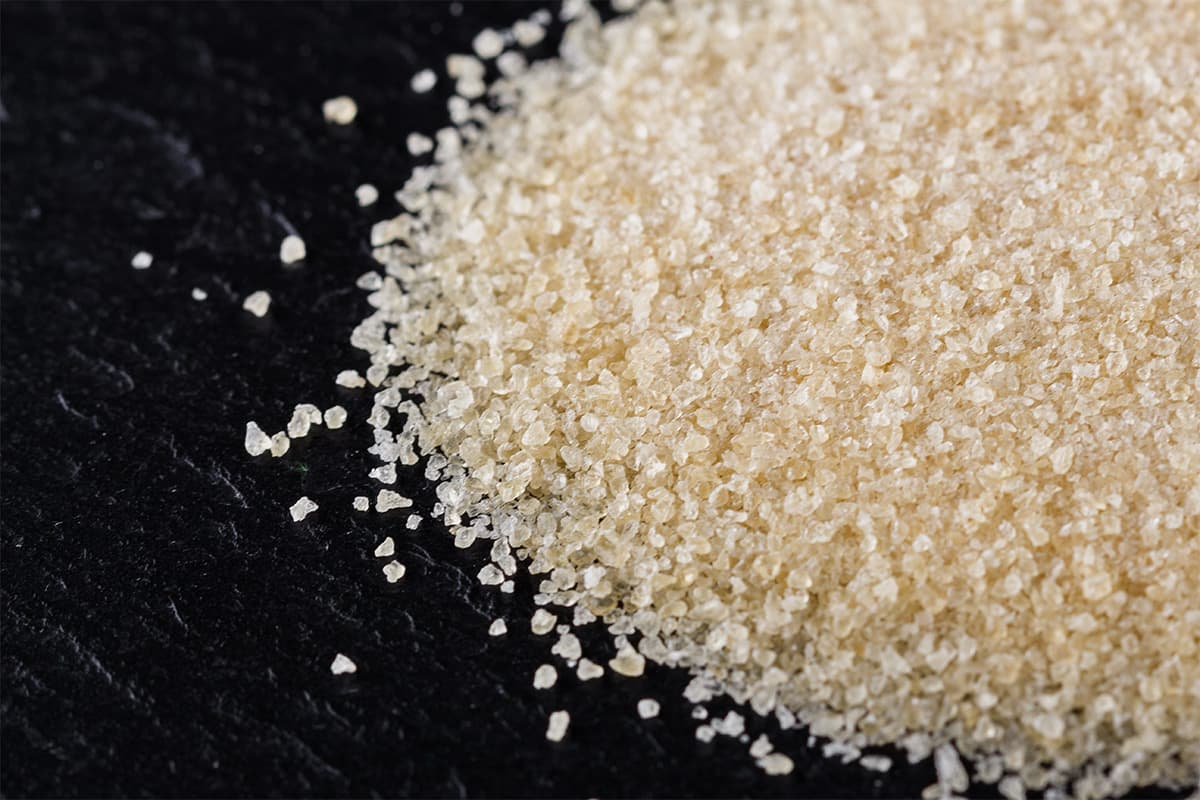
Gelatin is a protein obtained by hydrolyzing collagen, which is abundantly found in animal skin, bones, and tendons. Native collagen has a rigid, fibrous structure and is poorly soluble in water. Through acid or alkaline treatment and thermal extraction, the molecular structure is partially broken down, resulting in gelatin, which is more readily soluble in water.
When dissolved in water and cooled, gelatin forms a gel. This functionality—such as gelling, thickening, and providing desirable texture—has led to its widespread use in food, pharmaceutical, and cosmetic applications.
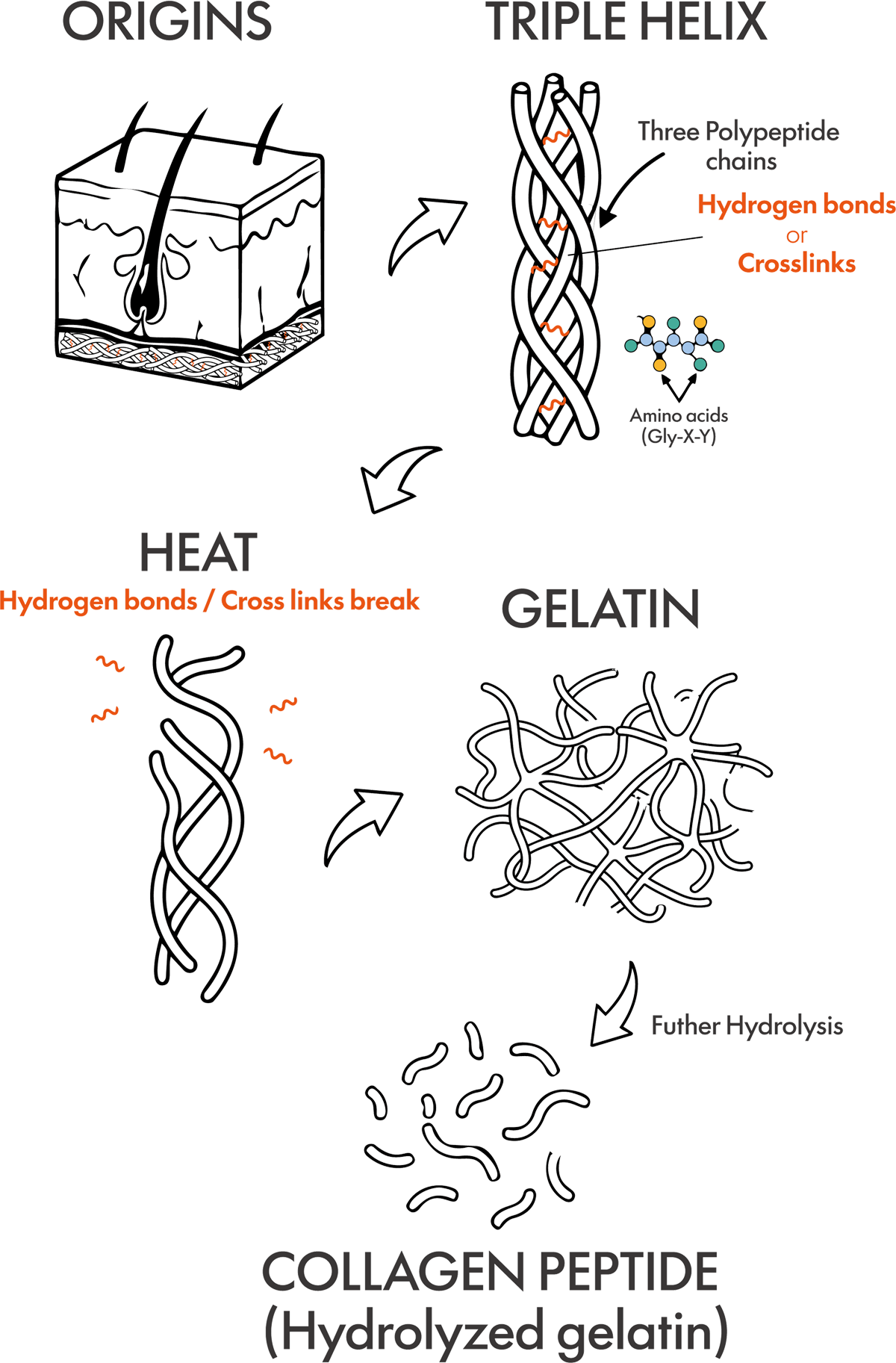
Collagen peptides (hydrolyzed gelatin) are produced via enzymatic hydrolysis, resulting in lower molecular weight fractions. Unlike gelatin, these peptides remain soluble upon cooling and do not form gels. In modern biotechnology, collagen peptides are critical for high-concentration formulations and as stabilizers in injectable drugs. However, as the molecular weight decreases, the hydrodynamic radius of the peptides approaches that of LPS monomers, rendering conventional size-exclusion methods significantly less effective.
What Are Endotoxins in Gelatin and Collagen Peptides?
Endotoxins in gelatin and collagen peptides refer to LPS derived from Gram-negative bacteria present in raw animal materials—such as porcine skin, bovine bone/skin, and fish skin—or introduced through the manufacturing environment.
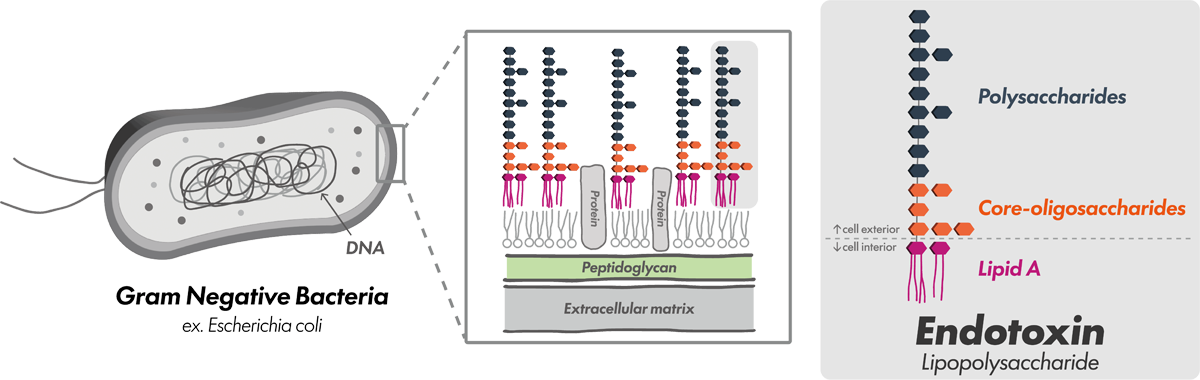
Gelatin and collagen peptides are proteins obtained by processing animal-derived collagen through acid or alkaline treatment and thermal extraction. During these processes—such as raw material handling, extraction, washing, and concentration—endotoxins originating from bacteria may remain in the final product.
Although standard processes, such as washing, filtration, heating, and sterilization, can effectively reduce or eliminate microbial cells, endotoxins themselves are highly heat-stable and chemically resistant. As a result, they can persist even after the bacteria have been inactivated, making complete removal extremely challenging.
In practice, even trace levels of endotoxins in gelatin used for pharmaceutical and biotechnology applications may pose risks, including pyrogenicity (fever induction) and unintended effects on cellular responses. Consequently, conventional purification based solely on general hygiene control is often insufficient to meet the required specifications.
Furthermore, gelatin processing frequently involves high-concentration, high-viscosity solutions, which can limit the effectiveness of standard filtration or simple chemical treatments for endotoxin reduction.
In addition, as a naturally derived material, gelatin is susceptible to recontamination during storage and handling via factors such as raw material conditions, process water, equipment biofilms, and airborne particulates.
For these reasons, endotoxins in gelatin and collagen peptides are considered critical impurities that must be carefully controlled according to the intended application.
Applications of Gelatin and Collagen Peptides and the Impact of Endotoxins
Gelatin and collagen peptides are used across a wide range of industries, including food, pharmaceuticals, medical materials, cosmetics, and biotechnology/regenerative medicine. Their functionality—such as gel formation, water retention, and film-forming properties derived from collagen—makes them highly versatile materials.
At the same time, as natural proteins derived from animal-based raw materials (e.g., porcine skin, bovine bone/skin, fish skin), they carry a risk of contamination and residual endotoxins originating from Gram-negative bacteria present in raw materials and manufacturing environments.
In particular, collagen peptides tend to be used at higher concentrations in final formulations due to their low molecular weight and high solubility. As a result, the total endotoxin load originating from the raw material can become relatively high.
Although endotoxins may not pose a concern in some applications, depending on the use environment and route of human exposure, they can impact safety, functionality, and overall product reliability.
For example, concerns related to endotoxins may arise in the following areas:
| Industry | Typical Use of Gelatin/Collagen Peptides | Endotoxin-Related Concerns |
|---|---|---|
| Food & Nutraceuticals | Jellies, functional beverages, collagen peptide supplements | Potential to trigger metabolic endotoxemia and low-grade chronic inflammation. In high-quality production, LPS serves as a critical biomarker for process hygiene and microbial control integrity. |
| Cosmetics & Topical Care | Serums, lotions, wound dressings, mucosal formulations | Risk of TLR4-mediated inflammatory cascades, leading to skin irritation, erythema, or sensitization, particularly on compromised skin barriers or mucosal membranes. |
| Pharmaceuticals & Biopharmaceuticals | Capsules, vaccine stabilizers, injectable excipients, ophthalmic solutions | Even ultra-trace LPS induces pyrogenic responses. Strict adherence to pharmacopeial limits (e.g., JP, USP, EP) is mandatory to ensure patient safety and regulatory compliance for parenteral administration. |
| Medical Materials | Hemostatic sponges, sealants, implantable scaffolds | May induce pro-inflammatory cytokine release at implantation sites, potentially impairing tissue regeneration or triggering systemic shock. Even trace levels are often unacceptable for clinical safety. |
| Regenerative Medicine & Cell Culture | Cell scaffolds, bio-inks, media additives, coating materials | Acts as a "hidden variable" that perturbs cellular homeostasis. It can trigger unintended cytokine release, impede the maintenance of stem cell pluripotency, and compromise the reproducibility of research and manufacturing outcomes. |
Particularly in life science applications, the use of low-endotoxin gelatin and collagen peptides is essential.
What Are Low-Endotoxin Gelatin and Collagen Peptides?
Low-endotoxin gelatin and collagen peptides are materials in which LPS levels are minimized and tightly controlled throughout the manufacturing process—from raw material acceptance and storage to extraction, purification, drying, and packaging—and accompanied by comprehensive quality management.
In particular, in life science applications where materials are used in environments close to the human body, endotoxins can directly lead to risks such as pyrogenicity, inflammatory responses, and (in severe cases) shock. In addition, in cell-based applications, endotoxins can disrupt cellular responses and compromise the reproducibility of data.
For this reason, in pharmaceutical, medical, and biotechnology applications, endotoxin control is required at the raw material stage, based on back-calculation from the final product’s dosage and usage conditions. As a result, materials are often supplied as defined low-endotoxin grades tailored to specific applications.
The approach to endotoxin control varies depending on the application, as outlined below:
| Field | Key Considerations |
| Pharmaceuticals/ Biopharmaceuticals/ Medical Applications | - Endotoxin limits are defined for each final product based on pharmacopeial and regulatory frameworks (e.g., the K/M calculation), derived from dosage and route of administration. - Depending on the administration route, low EU/g specifications may be required for raw materials, such as gelatin. - In medical, regenerative medicine, and cell-related applications, low endotoxin levels are directly linked to safety, data reliability, and regulatory compliance, leading to the use of defined endotoxin control grades. - In practice, multiple low-endotoxin grade tiers are established depending on the application, with specified control ranges. |
| Medical Devices | - Under Food and Drug Administration frameworks, endotoxin limits are defined as either extract limits (endotoxin units [EU]/mL) or device-based limits (EU/device), depending on the type of patient contact. - When gelatin is used as a medical device material, target EU/g levels for raw materials must be determined based on the final product’s extraction conditions and usage scenario. |
Methods for Reducing Endotoxins in Gelatin
Reducing endotoxins in gelatin and collagen peptides is difficult to achieve through conventional processes, such as washing, filtration, and sterilization, alone. Instead, it is essential to combine dedicated removal steps depending on the intended application (e.g., pharmaceutical, medical, or biotechnology use).
In particular, gelatin is a high-molecular-weight, high-viscosity material. Endotoxins can form aggregates or bind to proteins; therefore, removal efficiency and reproducibility are highly dependent on process conditions.
Ultrafiltration (UF)
Ultrafiltration (UF) is a membrane-based separation method that relies on size exclusion. Under suitable conditions, it can retain gelatin while reducing endotoxins.
Because LPS can form micelle-like aggregates in aqueous systems, selecting an appropriate membrane (e.g., ~100 kDa cut-off) can enable partial removal.
However, several technical challenges arise when processing gelatin solutions:
Membrane fouling due to high viscosity
High-concentration or low-purity gelatin solutions tend to form a gel layer on the membrane surface, leading to fouling. This reduces process efficiency and increases cleaning frequency, resulting in higher operational costs.
Dissociation and membrane permeation of lipopolysaccharides
Changes in pH, salt concentration, or temperature may cause LPS aggregates to dissociate into smaller monomers (~10–20 kDa), which can pass through the membrane and remain in the final product.
Interaction between gelatin and lipopolysaccharides
Gelatin, as a protein, can interact with LPS through hydrophobic and electrostatic interactions. Strong binding may trap LPS within gelatin molecules, preventing separation even when size differences exist.
Material degradation due to shear stress
High pressure and high flow rates required for filtering viscous solutions can introduce shear stress, potentially affecting gelatin’s higher-order structure and altering its properties, such as gel strength.
In addition, large-scale processing requires extensive membrane area, frequent cleaning, and strict control of operating conditions, all of which increase cost.
For these reasons, UF is typically not used as a standalone solution but rather in combination with pretreatment (e.g., pH, salt, temperature control) or other purification methods.
Ion Exchange
Ion exchange removes negatively charged LPS by adsorption onto anion exchange media (resins or membranes). It is a well-established industrial method with high removal potential. In some cases, endotoxin levels have been reduced to injection-grade water levels (<0.25 EU/mL).
However, in gelatin and collagen peptide systems, improper condition design can lead to several issues:
Adsorption and yield loss depending on the isoelectric point (pI)
Gelatin properties vary depending on processing type (Type A: pI 7–9, Type B: ~pI 5). When operating conditions cause gelatin to carry a negative charge, it may adsorb onto the ion exchange medium along with LPS, substantially reducing yield.
Scale-up challenges due to high viscosity and polydispersity
Gelatin solutions exhibit high viscosity and broad molecular weight distribution, leading to pressure drops and uneven flow in columns, which limits industrial scalability.
Process complexity depending on raw materials
Lipopolysaccharides removal behavior depends strongly on raw material origin, salt concentration, and pH. This requires precise optimization for each batch, increasing process complexity and reducing reproducibility.
To address these issues, process design often includes controlled salt addition (e.g., NaCl) to suppress excessive gelatin adsorption while maintaining LPS removal.
Heat and pH Treatment (Decomposition/Inactivation)
Although endotoxins are highly heat-stable, extreme conditions can partially degrade or reduce them. For example, dry heat depyrogenation (e.g., 250°C for 30 minutes) is used for equipment sterilization.
However, applying such conditions to gelatin leads to the following:
Hydrolysis and molecular degradation
Excessive heat or extreme pH conditions break down the gelatin backbone, reducing gel strength and viscosity.
Irreversible changes in physicochemical properties
Denaturation and chemical modification can alter pI, color, and transparency, substantially impacting product performance.
As a result, this method is generally limited in practical use.
Nonionic Surfactant + Adsorption (Phase Separation/Micelle Method)
This approach uses nonionic surfactants to dissociate protein–LPS complexes, allowing LPS to form micelles that can be captured and removed using adsorbents.
Although effective in principle, several challenges limit industrial application:
Residual surfactant risk
Complete removal of surfactants from high-viscosity gelatin solutions is extremely difficult. Residual surfactants pose major safety concerns, particularly in pharmaceutical and cell culture applications.
Process variability and scale-up challenges
Phase separation requires precise temperature control and uniform mixing. In high-viscosity systems, uneven heat transfer can lead to variability in endotoxin removal efficiency.
Separation and yield issues
Handling and filtering high-viscosity slurries containing adsorbents increases equipment load, reduces throughput, and causes product loss.
Despite its high removal potential, this method requires careful process design and strict quality control.
Adsorption (Activated Carbon)
Activated carbon can remove endotoxins through hydrophobic interactions with the lipid A component.
However, there are some drawbacks:
Non-specific adsorption and yield loss
Gelatin and collagen peptides also contain hydrophobic residues and may be co-adsorbed, reducing yield and causing variability in material properties.
Limited adsorption capacity
Activated carbon has a finite capacity and may be insufficient for materials with high initial endotoxin levels.
Process burden
Additional solid–liquid separation steps increase processing complexity.
Therefore, this method is often used as a supplementary step rather than a primary solution.
Adsorption (Polymyxin B-Modified Resins)
Polymyxin B has a strong affinity for the lipid A component of endotoxins, enabling selective removal when immobilized on resins or membranes.
However, several limitations exist:
High material cost
Polymyxin B is expensive, making large-scale processing economically challenging.
Ligand leaching risk
Polymyxin B may detach from the support matrix and contaminate the product. As an antibiotic, even trace amounts raise safety and regulatory concerns.
Limited scalability
Due to cost and operational complexity, this method is typically limited to laboratory-scale or high-value applications.
Summary of Purification Methods and Key Challenges
| Method | Principle | Key Challenges |
|---|---|---|
| Ultrafiltration | Size exclusion | Membrane fouling due to high viscosity |
| Ion exchange | Electrostatic interaction | Yield loss due to gelatin adsorption (pI-dependent) |
| Activated carbon | Hydrophobic interaction | Residual risk and impact on material properties |
Low-Endotoxin Gelatin and Collagen Peptides from Nagase ChemteX
Nagase ChemteX has developed a ligand-specific adsorption technology that enables the targeted removal of endotoxins while maintaining the functional integrity of the protein matrix.
This adsorption technology makes it possible to remove endotoxins from gelatin and collagen peptides efficiently. Because the process is less affected by raw material lot variation or material properties, such as molecular weight distribution and viscosity, Nagase ChemteX offers multiple grades of low-endotoxin gelatin (Arcofeliz™ GE series) and low-endotoxin collagen peptides (Arcofeliz™ CP series), allowing proposals tailored to specific applications, such as pharmaceutical, medical, and biotechnology use.
Nagase ChemteX’s low-endotoxin gelatin, produced using this proprietary selective adsorption method, offers the following advantages. In addition to very low endotoxin content and high purity, gel strength and molecular weight can also be tailored to customer requirements.
Key Features
Preservation of gelatin properties (e.g., gel strength)
The process does not require harsh heating, extreme pH adjustment, or high-pressure filtration. As a result, the original molecular weight distribution, gel strength (Bloom value), and viscosity characteristics of gelatin can be maintained.
No surfactants or antibiotics used
Because the process does not rely on hard-to-remove surfactants or polymyxin B, the risk of residual components causing cytotoxicity or immunogenicity is minimized. This makes the materials suitable even for applications requiring a high level of safety, such as regenerative medicine and injectable formulations.
Stable process independent of raw material lot variation
The adsorption design is less affected by gelatin-specific factors, such as isoelectric point (pI) and molecular size, helping to suppress lot-to-lot variation and maintain stable low-endotoxin quality.
Product Lineup
A wide range of grades is available depending on the intended application (pharmaceutical, medical, or biotechnology use), raw material source, and required physical properties.
Arcofeliz™ GE Series (Low-Endotoxin Gelatin)
High gel strength (high Bloom) and low endotoxin levels are achieved regardless of raw material source.
| Raw Material Source | Grade | Endotoxin | Gel strength |
|---|---|---|---|
| Porcine | Type A/Type B | ≦10EU/g | ≧250 g |
| Bovine | Type B | ≦100EU/g | ≧250 g |
| Fish | Type A/Type B | ≦10EU/g | ≧250 g |
Arcofeliz™ CP Series (Low-Endotoxin Collagen Peptides)
Stable low-endotoxin control has also been achieved for collagen peptides, which have a lower molecular weight and are therefore extremely difficult to purify using conventional methods.
| Raw Material Source | Grade | Endotoxin |
|---|---|---|
| Porcine | Type A/Type B | ≦50EU/g |
| Bovine | Type B | ≦50EU/g |
| Fish | Type A/Type B | ≦50EU/g |
If you are interested in low-endotoxin gelatin or collagen peptides, please feel free to contact us.
【References】
Cani, P. D., et al. (2007). Diabetes, 56(7), 1761-1772.
Erridge, C., et al. (2007). The American Journal of Clinical Nutrition, 86(5), 1286-1292.
The Ministry of Health, Labour and Welfare. (2021). The Japanese Pharmacopoeia, 18th Edition, General Tests 4.01.
United States Pharmacopeial Convention. (2024). United States Pharmacopeia (USP), Chapters <85> & <161>.
Sandle, T. (2016). Pharmaceutical Microbiology: Essentials for Quality Assurance and Quality Control, Woodhead Publishing.
Gorbet, M. B., & Sefton, M. V. (2005). Biomaterials, 26(34), 6811-6817.
International Organization for Standardization. (2017). ISO 10993-11:2017 Biological evaluation of medical devices, Part 11.
Nomura, M., et al. (2017). Scientific Reports, 7(1), 1-11.
- 【Important Notice Regarding the Pharmaceuticals and Medical Devices Act (PMD Act, formerly the Pharmaceutical Affairs Act)】
- Positioning of This Technology: The products and technologies described in this article are intended for use as raw materials or processing technologies in the manufacturing and research and development of pharmaceuticals and medical devices. They do not guarantee the efficacy or safety of final products.
- About Arcofeliz™: The Arcofeliz™ series is designed as a material for use in pharmaceutical excipients and medical device applications. It is not a pharmaceutical product intended for the diagnosis, treatment, or prevention of disease.
- Quality specifications: Expressions such as “low endotoxin” refer to physicochemical properties based on product specifications and do not imply any clinical efficacy.
Related Products

Arcofeliz ™ GE series: Low-Endotoxin Gelatin
Arcofeliz ™ GE Series is a low-endotoxin gelatin produced by purification with a newly developed endotoxin removal materials.
Learn More
Arcofeliz ™ CP series: Low-Endotoxin Collagen Peptide
Arcofeliz ™ CP Series is a low-endotoxin collagen peptide produced by purification with a newly developed endotoxin removal materials.
Learn More
Arcofeliz ™ EN series: Low-Endotoxin Enzyme
Arcofeliz ™ EN Series is a low-endotoxin enzyme produced by purification with a newly developed endotoxin removal materials.
Learn More
We’re Here to Help
Complete the following fields with your information, as well as a short, detailed description of your request and a NAGASE Specialist will be in touch with you shortly.