





Endotoxin Control in Xanthan Gum
Technical Challenges and Solutions for Low-Endotoxin Processing
Jun 09, 2026
Xanthan gum is a microbial polysaccharide widely used across industries such as food, pharmaceuticals, cosmetics, and biotechnology.
However, residual endotoxins, or lipopolysaccharides (LPS), originating from the manufacturing process can pose critical challenges, depending on the application. These impurities may affect safety, functionality, and overall product reliability.
In this article, we provide a comprehensive overview of xanthan gum—from its fundamental properties to the impact of endotoxins, the necessity of endotoxin control, removal methods and their limitations, and low-endotoxin xanthan gum solutions offered by Nagase ChemteX.
What Is Xanthan Gum?
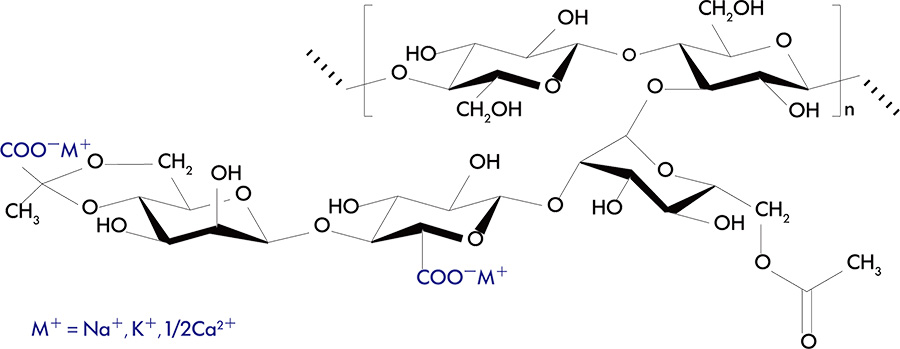
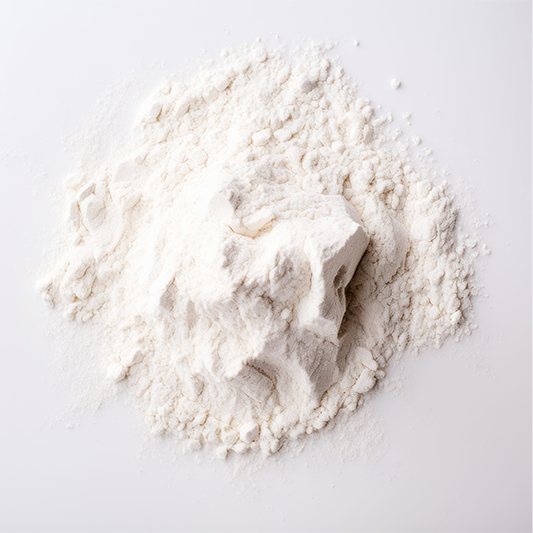
Xanthan gum is a high-molecular-weight polysaccharide produced by fermentation using the microorganism Xanthomonas campestris.
It has a unique molecular structure consisting of a glucose backbone with side chains containing mannose and glucuronic acid. When dissolved in water, it exhibits high viscosity even at low concentrations.
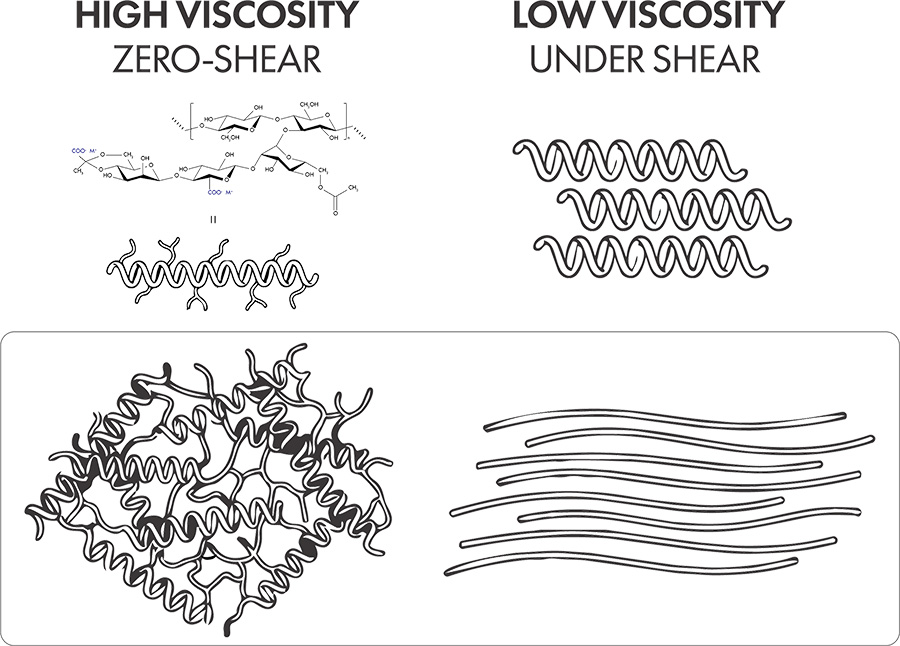
In addition, xanthan gum is highly stable against variations in temperature, pH, and salinity and exhibits shear-thinning behavior. These properties make it widely used as a thickener and stabilizer in food, pharmaceutical, and cosmetic applications.
In recent years, due to its tunable physical properties and excellent processability, xanthan gum has also attracted attention for use in pharmaceutical formulations, biomaterials, cell culture, and regenerative medicine.
What Are Endotoxins in Xanthan Gum?
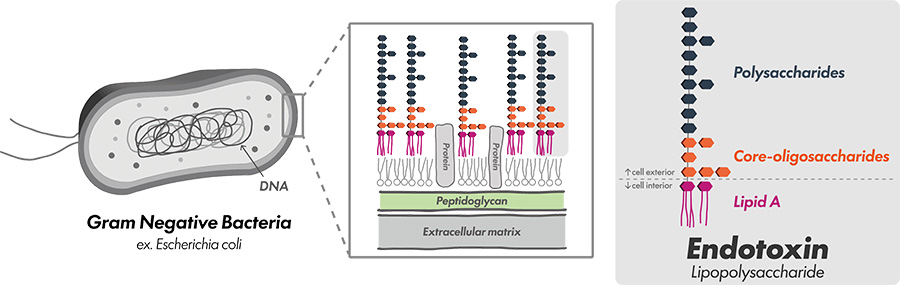
Endotoxins in xanthan gum refer to LPS derived from the Gram-negative bacterium Xanthomonas campestris, which is used in its production.
Because xanthan gum is a microbial polysaccharide produced through fermentation of this bacterium, endotoxins originating from the cells may remain in the final product after fermentation and purification.
Although bacterial cells are typically removed through heat treatment and other purification steps, endotoxins are highly resistant to heat and chemically stable, making complete removal extremely challenging.
In fact, high concentrations of endotoxins have been reported in xanthan gum with low purification levels. However, due to the charge characteristics and unique rheological properties of xanthan gum, conventional removal methods such as ion-exchange resins and ultrafiltration (UF) are often impractical.
In addition, as a naturally derived material, xanthan gum is susceptible to recontamination during storage and distribution, which may lead to an increase in endotoxin levels over time.
For these reasons, endotoxins in xanthan gum are considered a critical impurity that must be properly controlled, depending on the intended application.
Applications of Xanthan Gum and the Impact of Endotoxins
Xanthan gum is widely used across a broad range of industries—including food, pharmaceuticals, cosmetics, and biotechnology—due to its excellent thickening ability, stability, and processability.
At the same time, because xanthan gum is a microbial polysaccharide produced through fermentation using Gram-negative bacteria, there is a potential risk of endotoxin contamination during manufacturing.
Depending on the application, the presence of endotoxins may not always pose a significant issue. However, where there is direct or indirect exposure to the human body, endotoxins can affect safety, functionality, and overall product reliability.
For example, concerns related to endotoxins may arise in the following areas:
| Industry | Application | Potential Concerns |
|---|---|---|
| Food & Nutraceuticals | Stabilizer (E415), Thickener, Soluble fiber | Potential to trigger metabolic endotoxemia and low-grade chronic inflammation. In high-quality production, LPS serves as a critical biomarker for hygiene and process integrity. |
| Cosmetics & Topical Care | Gels, emulsions, Wound dressings | Risk of TLR4-mediated inflammatory cascades, leading to skin irritation, erythema, or sensitization, particularly on compromised skin barriers or mucous membranes. |
| Pharmaceuticals & Biopharmaceuticals | Injectables, Vaccine stabilizers, Ophthalmic solutions | Even ultra-trace LPS induces pyrogenic responses. Strict adherence to pharmacopeial limits (e.g., JP, USP, EP) is mandatory to ensure patient safety and regulatory compliance. |
| Regenerative Medicine & Cell Culture | Scaffolds, Bio-inks, Media additives, Cryopreservation | Acts as a "hidden variable" that perturbs cellular homeostasis. It can trigger unintended pro-inflammatory cytokine release, impede the maintenance of stem cell pluripotency, and compromise the reproducibility of experimental and manufacturing outcomes. |
In particular, in life science applications, the use of low-endotoxin Xanthan gum is essential to ensure safety and consistent performance.
What Is Low-Endotoxin Xanthan Gum?
Low-endotoxin xanthan gum refers to a material in which endotoxin levels are minimized and carefully controlled through optimized manufacturing processes and strict quality management.
In applications involving environments close to the human body, endotoxins can induce pyrogenic and inflammatory responses. For this reason, low-endotoxin grades are treated separately from standard xanthan gum products.
The approach to endotoxin control varies depending on the application, as outlined below:
| Industry | Regulatory Perspective / Approach |
| Pharmaceuticals & Biopharmaceuticals | ・Endotoxin limits for the finished product are strictly governed by international pharmacopeias (JP, USP, EP) and regional regulatory frameworks. Limits are determined using the $L = K/M$ formula, based on the maximum dose and specific route of administration. ・To meet these stringent criteria, raw materials must often satisfy predefined low EU/g (Endotoxin Units per gram) specifications to prevent cumulative contamination. ・In high-stakes fields like regenerative medicine and cell therapy, endotoxin control is a prerequisite for clinical data integrity and patient safety, necessitating the use of specialized "low-endotoxin grades." ・Nagase ChemteX offers a tiered portfolio of grades, enabling manufacturers to select the optimal control range based on their specific risk assessment. |
| Medical Devices | ・Under FDA frameworks and ISO 10993-11 standards, endotoxin limits are categorized by the device’s contact type (e.g., blood-contacting vs. tissue-contacting), defined as either concentration limits (EU/mL) in extracts or per-device limits (EU/device). ・When utilizing xanthan gum as a component, target specifications for the raw material must be established through back-calculation from the final device’s extraction profile and clinical usage parameters. ・Regulatory approval for implantable devices increasingly requires rigorous validation of endotoxin levels at the raw material stage to mitigate the risk of post-surgical inflammation or implant rejection. |
In this way, low-endotoxin xanthan gum is not simply a “low-impurity” material. Rather, it is a high-value product supported by application-specific endotoxin control, as well as robust manufacturing processes, testing protocols, and quality assurance systems.
It is particularly critical in fields such as pharmaceuticals, regenerative medicine, and cell culture, where it serves as a key factor in ensuring both safety and reliability.
Methods for Reducing Endotoxins in Xanthan Gum
Xanthan gum is a high-molecular-weight polysaccharide produced through microbial fermentation. In conventional manufacturing processes, bacterial cells are removed after cultivation, followed by recovery and drying of the crude polysaccharide.
However, while these processes effectively remove the cells themselves, LPS, which are highly heat-resistant and chemically stable, tend to remain in the final product.
In practice, even repeated centrifugation, filtration, or phenol extraction may fail to achieve endotoxin levels that meet required specifications. Therefore, for pharmaceutical and biotechnology applications, dedicated endotoxin-removal steps must be incorporated in addition to standard polysaccharide purification processes.
Ultrafiltration (UF)
Ultrafiltration is a membrane-based separation technique that relies on size exclusion.
In theory, it should allow retention of high-molecular-weight xanthan gum while removing smaller endotoxin molecules. However, endotoxins can form aggregates ranging from several hundred kDa to over 1 MDa, overlapping with the molecular size of xanthan gum. As a result, complete removal by membrane separation alone is difficult.
Additional challenges include:
Membrane fouling due to high viscosity
The higher-order structure of xanthan gum forms a gel layer on the membrane surface, significantly reducing flow rates. Lowering the concentration can mitigate this issue, but at the cost of reduced process efficiency.
Structural changes caused by shear stress
High pressure and circulation rates required for filtering viscous solutions generate strong shear forces, which can disrupt the rigid double-helix structure of xanthan gum. This may lead to irreversible changes in viscosity and stability.
Aggregation of LPS
Endotoxins can self-associate in aqueous solutions to form large micelle-like aggregates, further reducing the effectiveness of size-based separation.
For these reasons, UF is not practical as a standalone method and is typically combined with other techniques.
Ion Exchange Resin Method
This method removes negatively charged endotoxins by adsorption onto anion exchange resins.
Selective separation is hindered by the charge overlap between anionic LPS and xanthan gum. Adjusting ionic strength to improve yield often compromises LPS adsorption efficiency—a classic technical trade-off.
Charge Competition
Both xanthan gum (glucuronic acid/pyruvate groups) and LPS are anionic. Their proximate charge densities make selective adsorption extremely inefficient, often resulting in poor yields.
Reduced yield
Xanthan gum may strongly bind to the resin, resulting in significant product loss. Increasing salt concentration to mitigate this reduces endotoxin adsorption efficiency.
Poor flowability
Due to its high viscosity, xanthan gum solutions can cause pressure drops within the resin column, potentially leading to mechanical damage of the resin.
Although advanced approaches such as membrane adsorbers have been explored, high material costs limit their feasibility for large-scale processing. As such, this method is more suitable for small-scale or polishing steps.
Phase Separation Using Nonionic Surfactants
When combined with solid adsorbents, endotoxin reductions of over 4 logs (99.99%) have been reported. However, several challenges arise at industrial scale:
- Complete removal of residual surfactants
Surfactants themselves become impurities and must be fully removed. Due to the high viscosity of xanthan gum, removing trace amounts is extremely difficult and requires costly validation and analytical testing.
Temperature control challenges
This method requires precise temperature control. In large-scale, high-viscosity systems, maintaining uniform temperature distribution is difficult, leading to variability in endotoxin removal efficiency.
Difficulty in phase separation
The network structure of xanthan gum can hinder micelle aggregation. When solid adsorbents are used, filtration of the viscous slurry becomes difficult, reducing overall yield.
Limited compatibility with continuous processing
The process requires long settling times and stepwise temperature control, making it unsuitable for high-throughput continuous manufacturing.
While highly effective, this method requires careful process design and regulatory consideration.
Adsorption Method (Activated Carbon)
The toxic component of endotoxins, lipid A, is hydrophobic. Activated carbon has strong adsorption affinity for hydrophobic substances, enabling removal of endotoxins from xanthan gum solutions.
However, xanthan gum itself can also adsorb onto activated carbon. Combined with its high molecular weight and viscosity, this often results in reduced yield.
In addition, adsorption is non-specific and capacity is limited, making it less effective for solutions with high endotoxin concentrations.
Adsorption Method (Polymyxin B-Modified Resin)
Polymyxin B has a strong affinity for the lipid A portion of endotoxins. By passing xanthan gum solutions through polymyxin B-immobilized beads or membranes, selective removal of endotoxins can be achieved under appropriate conditions.
However:
Xanthan gum’s high molecular weight and viscosity may still lead to non-specific interactions, depending on operating conditions
Polymyxin B is extremely expensive, limiting its use to laboratory-scale or high-value applications
Summary of Purification Methods and Key Challenges
| Method | Principle | Technical Challenges |
|---|---|---|
| Ultrafiltration | Size exclusion | Membrane fouling due to high viscosity |
| Ion Exchange | Electrostatic interaction | Reduced selectivity and yield due to overlapping negative charges |
| Activated Carbon Adsorption | Hydrophobic interaction | Risk of residual impurities and impact on xanthan gum properties |
Low-Endotoxin Xanthan Gum from Nagase ChemteX
Nagase ChemteX has successfully overcome the long-standing trade-off between "high purity" and "structural integrity." Our proprietary adsorption technology enables the selective removal of LPS without the need for Polymyxin B or harsh surfactants.
Achieving low-endotoxin control in xanthan gum is technically highly challenging, and only a limited number of manufacturers worldwide are capable of supplying such materials. By leveraging this advanced adsorbent technology, Nagase ChemteX has developed a low-endotoxin xanthan gum product, Arcofeliz™ XA-100, overcoming limitations associated with conventional methods.
Xanthan gum, being derived from microbial fermentation, often contains endotoxin levels ranging from thousands to millions of EU/g, even at pharmaceutical-grade quality. In contrast, Arcofeliz™ XA-100 achieves an endotoxin level of ≤100 EU/g, representing a significant reduction and enabling its use in more demanding applications.
| Grade / Manufacturer | Endotoxin Level |
|---|---|
| Nagase ChemteX | ≦100 EU/g |
| Typical Pharmaceutical Grade | Tens of thousands to several million EU/g |
If you are interested in low-endotoxin Xanthan gum, please feel free to contact us for further information.
【References】
Erridge, C., et al. (2007). The American Journal of Clinical Nutrition, 86(5), 1286–1292.
Cani, P. D., et al. (2007). Diabetes, 56(7), 1761–1772.Cosmetic Ingredient Review Expert Panel. (2012). International Journal of Toxicology, 31(5_suppl), 176S–203S.
Gorbet, M. B., & Sefton, M. V. (2005). Biomaterials, 26(34), 6811–6817.
The Japanese Pharmacopoeia, 18th Edition. (2021). General Tests 4.01 Bacterial Endotoxins Test.
U.S. Food and Drug Administration (FDA). (2012). Guidance for Industry: Pyrogen and Endotoxins Testing.
Cosmetic Ingredient Review Expert Panel. (2012). International Journal of Toxicology, 31(5_suppl), 176S–203S.
Csako, G., et al. (1983). Applied and Environmental Microbiology, 45(4), 1342–1350.
Magalhães, P. O., et al. (2007). Journal of Pharmacy & Pharmaceutical Sciences, 10(3), 388-404.
- 【Important Notice Regarding the Pharmaceuticals and Medical Devices Act (PMD Act, formerly the Pharmaceutical Affairs Act)】
- Positioning of This Technology: The products and technologies described in this article are intended for use as raw materials or processing technologies in the manufacturing and research and development of pharmaceuticals and medical devices. They do not guarantee the efficacy or safety of final products.
- About Arcofeliz™: The Arcofeliz™ series is designed as a material for use in pharmaceutical excipients and medical device applications. It is not a pharmaceutical product intended for the diagnosis, treatment, or prevention of disease.
- Quality specifications: Expressions such as “low endotoxin” refer to physicochemical properties based on product specifications and do not imply any clinical efficacy.
Related Products

Arcofeliz ™ GE series: Low-Endotoxin Gelatin
Arcofeliz ™ GE Series is a low-endotoxin gelatin produced by purification with a newly developed endotoxin removal materials.
Learn More
Arcofeliz ™ CP series: Low-Endotoxin Collagen Peptide
Arcofeliz ™ CP Series is a low-endotoxin collagen peptide produced by purification with a newly developed endotoxin removal materials.
Learn More
Arcofeliz ™ EN series: Low-Endotoxin Enzyme
Arcofeliz ™ EN Series is a low-endotoxin enzyme produced by purification with a newly developed endotoxin removal materials.
Learn More
We’re Here to Help
Complete the following fields with your information, as well as a short, detailed description of your request and a NAGASE Specialist will be in touch with you shortly.