





Endotoxin Control in the Development of Advanced Surgical Devices
(Advanced Wound Dressings, Topical Hemostats, and Adhesion Barriers)
October 26, 2026
Advanced wound dressings, topical absorbable hemostats, and surgical adhesion barriers make up the three product families collectively known as advanced surgical devices. All three come into direct contact with surgical fields and wound beds where the skin or tissue barrier has been severely compromised, and many are implanted or left inside the body.
Optimizing physical performance, such as fluid absorption, hemostatic action, and tissue adherence, is therefore only part of the task: the endotoxin (LPS) carried by the raw materials must also be tightly controlled.
This article looks at the materials used in advanced surgical devices, how endotoxin affects product performance and efficacy, the regulatory-science background behind the Food and Drug Administration's (FDA) expectations, measures for preventing contamination during development and manufacturing, and what to look for when selecting low-endotoxin materials.
What Are Advanced Surgical Devices?
Advanced surgical devices—advanced wound dressings, topical hemostats, and adhesion barriers—are medical materials and devices that protect tissue in the surgical field or wound bed, manage exudate and bleeding, and support tissue repair and physiological homeostasis, including the prevention of adhesions.
Modern advanced wound dressings do more than cover a wound the way traditional gauze does. They are chosen for their specific functions, including absorbency, moisture retention, gelation, hemostasis, and antimicrobial action.
These products come into direct contact with sites where the skin or tissue barrier has been substantially compromised, including surgical incisions, cut surfaces of solid organs, serosal membranes, and refractory ulcers. Beyond the functional design of the material itself, two quality requirements become essential: biocompatibility and control of trace impurities carried over from the raw materials, including endotoxin.
Types of Advanced Surgical Devices
Advanced surgical devices fall into three main categories.
| Category | Typical use | Representative materials | How it contacts the body | Key point for endotoxin control |
|---|---|---|---|---|
| Advanced wound dressings | Pressure ulcers, burns, surgical wounds, chronic wounds | Sodium alginate, hydrogels, collagen peptide | Applied to the wound surface (body surface; several days until replacement) | Sits directly on a wound that has lost its barrier, so control is needed to avoid an excessive inflammatory response |
| Topical absorbable hemostats | Bleeding from solid organs and fine vessels | Gelatin (porous sponges, powdered gels), polysaccharides | Left in the body and absorbed and broken down over a defined period | Because the material stays in the tissue, low-endotoxin control is needed so it does not lead to local inflammation or a granulomatous reaction |
| Surgical adhesion barriers | Preventing postoperative adhesion of organs and tissue | Pullulan, hyaluronic acid, CMC, hydrogels | Applied or injected onto serosal surfaces, then degraded and absorbed in the body | If residual endotoxin amplifies inflammation, the anti-adhesion effect itself may be diminished |
Advanced Wound Dressings
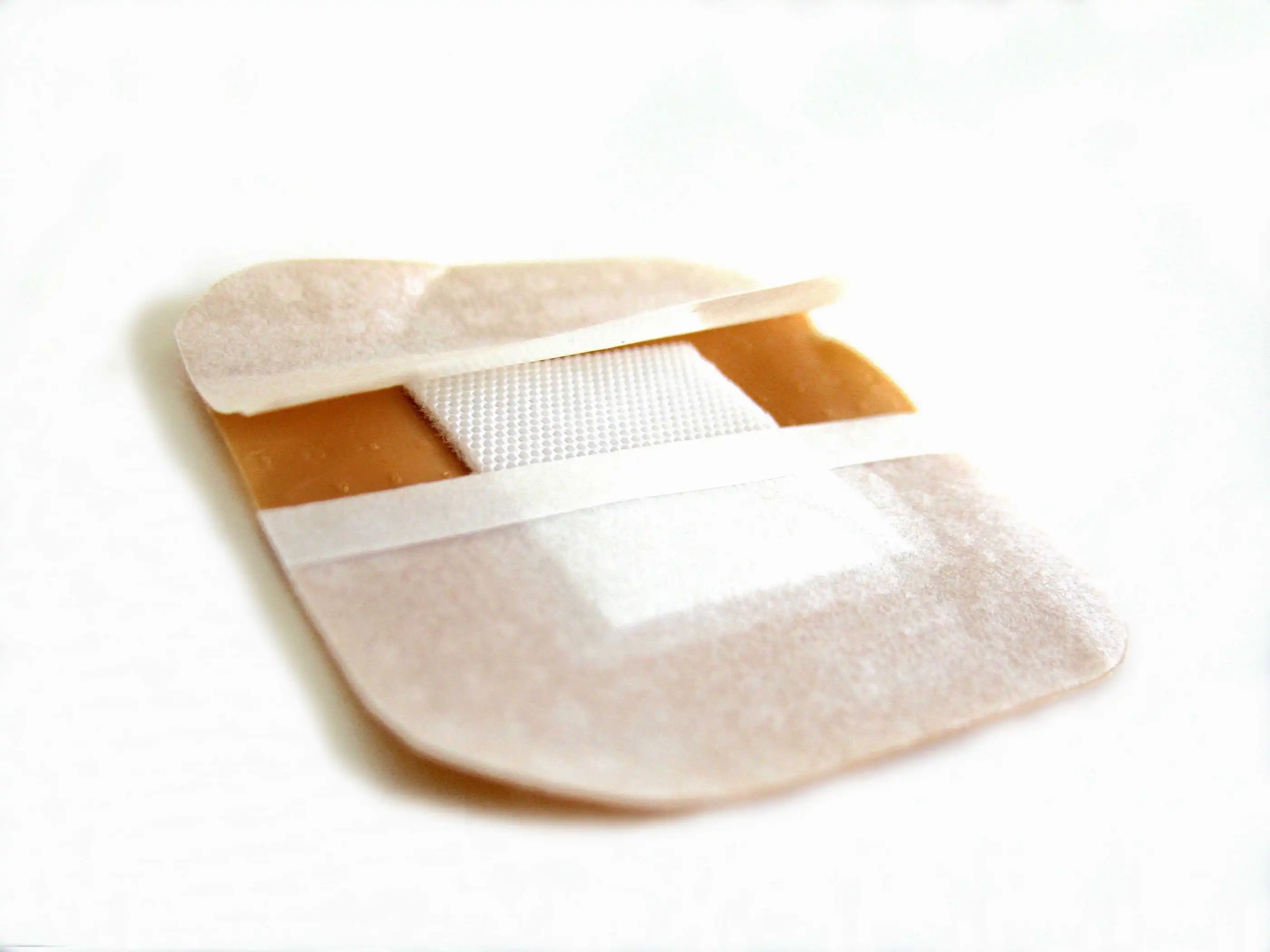
Advanced wound dressings are used on pressure ulcers, burns, surgical wounds, and chronic wounds. They absorb and retain exudate while maintaining the moist environment that supports healing.
Hydrophilic polymers such as alginates and hydrogels are common choices in this category. When they come into contact with body fluids, they form a soft gel layer that conforms closely to the wound surface.
Because they sit directly on tissue that has lost its skin barrier, however, strict quality control is needed to ensure that endotoxin carried over from the raw materials does not trigger an excessive inflammatory response.
Topical Absorbable Hemostats
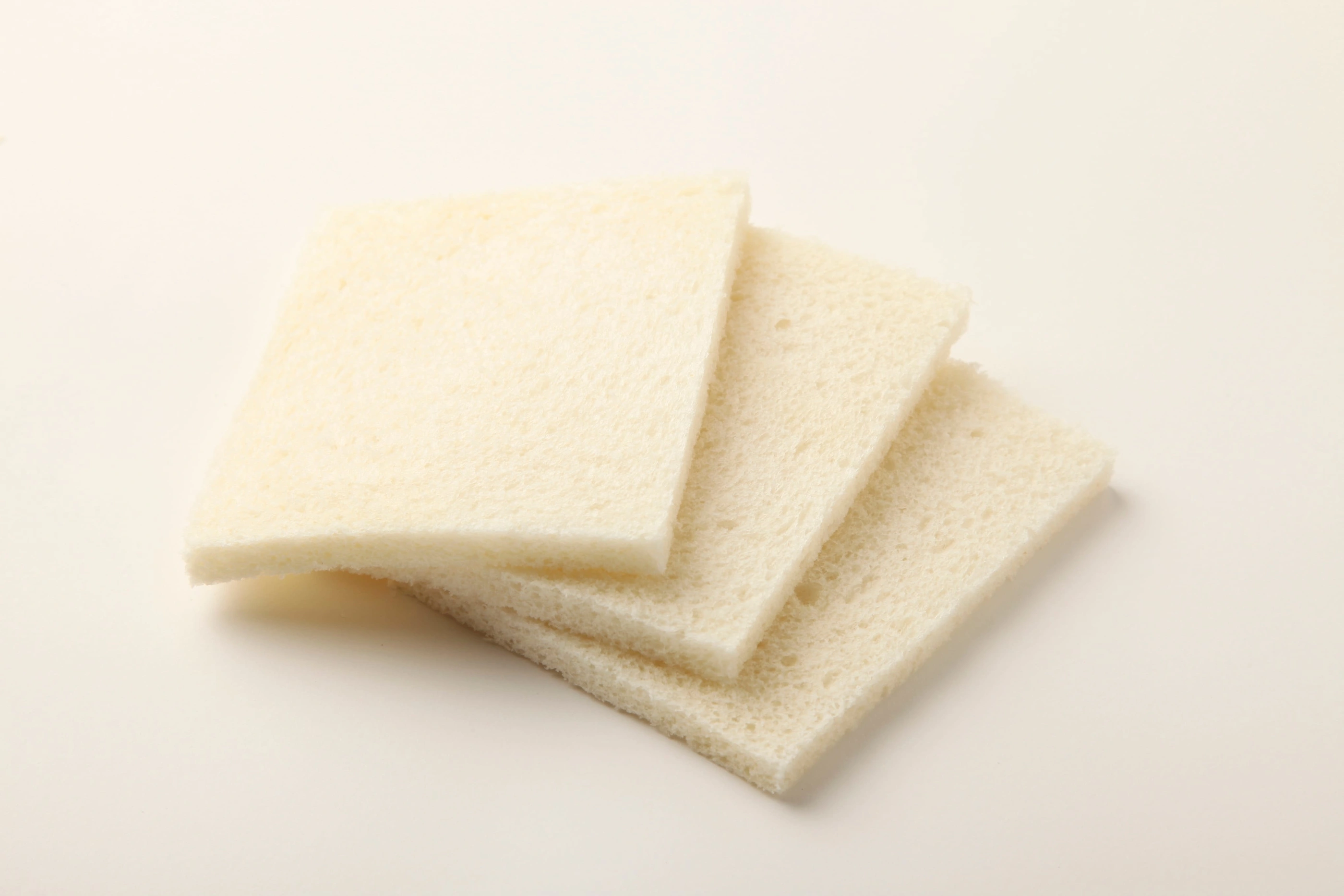
Topical absorbable hemostats quickly control bleeding during surgery and are resorbed by the body afterward. They are applied when ligation or electrocautery alone cannot achieve hemostasis, such as when bleeding comes from fine vessels or solid organs, including the liver and spleen.
Gelatin-based porous sponges, powdered gels, and two-part hemostatic sprays are all widely used in this category. These materials are designed to be absorbed and broken down in the body over a defined period.
Because the material remains in the tissue, strict quality control is needed so that endotoxin in the raw material does not provoke a local inflammatory or granulomatous reaction.
Surgical Adhesion Barriers
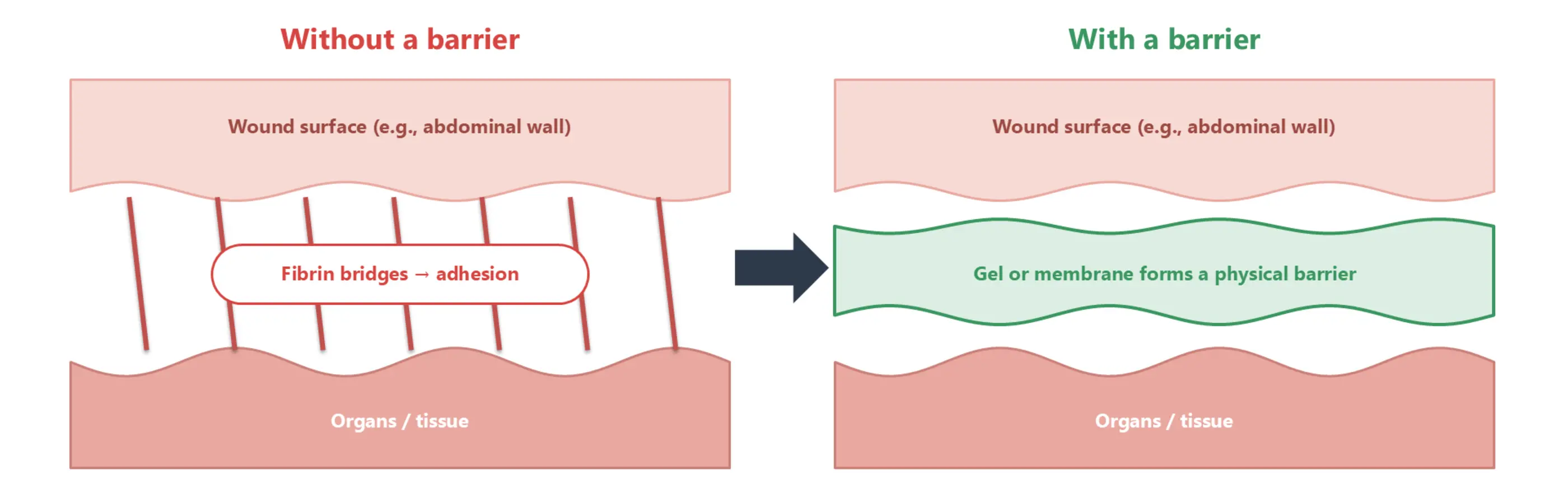
Surgical adhesion barriers are designed to prevent adhesions—the unintended binding of a wound surface to adjacent organs and tissue after surgery. They work by placing a physical barrier between the wound surface and the surrounding tissue.
Products include gels injected into the surgical field and thin membrane sheets applied to the wound surface. Both are designed to function as a barrier for a set period before breaking down and being absorbed.
Serosal surfaces in the surgical field are extremely delicate. If endotoxin (LPS) remains in the material, it can amplify local inflammation and undermine the barrier's ability to prevent adhesions.
When surgery injures tissue, fibrin is deposited locally and forms temporary bridges between organs and tissues. Normally the body breaks this fibrin down, but prolonged inflammation impedes that process and encourages fibroblast recruitment and collagen production. As a result, adhesions can reform even when a physical barrier is in place.
For adhesion barriers, then controlling trace impurities such as endotoxin matters just as much as designing the material's shape and degradation profile.
Endotoxin Control in Adhesion Barriers and the FDA's Regulatory Position
A resorbable adhesion barrier stays in the body for a period after surgery. That places a high bar not only on the product's efficacy but also on its biocompatibility and safety.
One of the most important of those requirements is the control of pyrogens—fever-inducing substances, endotoxin (LPS) foremost among them. Sterility alone is not enough: trace endotoxin originating in the raw materials, or the manufacturing process must be controlled so that it does not affect local inflammation or product performance.
The FDA's Regulatory Guidance
In its industry guidance, Guidance for Resorbable Adhesion Barrier Devices for Use in Abdominal and/or Pelvic Surgery, the FDA classifies resorbable adhesion barriers used in abdominal and pelvic surgery as high-risk Class III devices.
As a result, premarket approval (PMA) and investigational device exemption submissions must include detailed data demonstrating the product's safety and effectiveness.
In the manufacturing section of that guidance, the FDA lists pyrogen level as a key quality attribute in the finished-device release specification, alongside dimensions, mechanical properties, and sterility.
In other words, an adhesion barrier is expected to do more than be sterile—impurities capable of provoking inflammation in the body must also be properly controlled.
Specific Requirements Seen in PMA Submissions
In practice, PMA submissions for resorbable adhesion barrier devices may include a bacterial endotoxin test as a product release requirement—for example, testing to ANSI/AAMI ST72 to confirm that endotoxin in the finished device is below the specified limit.
A limit on the order of 20 endotoxin units per product is one commonly used approach. Acceptable levels vary with the application site, the quantity used, and how the device contacts the body, so each product requires its own risk assessment and confirmation of the applicable requirements.
The endotoxin specification required of a raw material is derived by working backward from the allowable limit for the finished product and the amount of material used. If the limit is 20 EU per product and each product uses 0.5 g of the material, for example, a simple calculation puts the requirement at 40 EU/g or less.
In practice, allowance is made for contamination during manufacturing and for a margin of safety, so a raw material with a tighter specification is selected.
| Item | Example |
|---|---|
| Allowable endotoxin per finished product | 20 EU/product |
| Amount of material used per product | 0.5 g |
| Resulting upper limit for the raw material (simple calculation) | 20 EU ÷ 0.5 g = 40 EU/g |
| Guide for raw-material selection with a safety margin | A specification well below 40 EU/g (e.g., ≤10–20 EU/g) |
Endotoxin control in resorbable adhesion barriers is therefore not simply a matter of hygiene or sterility. Keeping the biological response to residual endotoxin in check is also a quality requirement for preserving the product's core function—preventing adhesions.
Principal Materials Used in Advanced Surgical Devices
Advanced surgical devices draw on a range of biomaterials depending on where and how the product is used. The right material depends on the condition of the wound surface, the absorbency or hemostatic performance required, how long the device must function in the body, and how it degrades and is absorbed.
Materials are therefore chosen to match the product's required functions: absorbency, gelation, hemostasis, and tissue adherence.
| Material | Source | Main functions | Devices where it is mainly used | Main risk factors for endotoxin contamination |
|---|---|---|---|---|
| Sodium alginate | Brown seaweed (natural extraction) | Absorbency, gelation | Advanced wound dressings | Harvesting and extraction of the seaweed raw material |
| Gelatin | Animal (porcine, bovine, fish) | Gel formation, absorbency, biocompatibility | Topical absorbable hemostats | Animal-derived raw material, hydrolysis process |
| Collagen and collagen peptide | Animal (porcine, bovine, fish) | Cell scaffold, solubility and ease of formulation | Advanced wound dressings, topical absorbable hemostats | Animal-derived raw material, molecular weight reduction process |
| Hydrogel materials | Composites of the above materials with CMC and similar polymers | Water retention, maintenance of a moist environment, physical barrier | Advanced wound dressings, surgical adhesion barriers | Constituent materials, cross-linkers, and additives |
| Polysaccharide materials (pullulan, xanthan gum, hyaluronic acid, CMC, chitosan, etc.) | Microbial fermentation, natural extraction | Viscosity adjustment, film formation, gelation | Surgical adhesion barriers, hemostatic sprays | Fermentation process (Gram-negative bacteria), extraction and purification processes |
Sodium Alginate
Sodium alginate is a naturally derived polysaccharide extracted from brown seaweed. It reacts with calcium and other ions to form a soft hydrogel.
It is widely used as a base material for advanced wound dressings because it absorbs exudate while keeping the wound surface moist. It is particularly useful for heavily exuding wounds, where both absorbency and gelation are needed.
Gelatin
Gelatin is an animal-derived material obtained by partially hydrolyzing collagen. It gels readily and offers good absorbency and biocompatibility, making it a common base material for topical absorbable hemostats.
Typical forms include porous sponges and powdered gel matrices, which absorb blood at the bleeding site and assist hemostasis. Another major advantage in surgical applications is that the material is absorbed and broken down in the body over a defined period.
As an animal-derived material, however, it requires attention to allergy risk and control of trace impurities such as endotoxin arising from the raw material and the manufacturing process.
Collagen and Collagen Peptide
Collagen is the principal protein of the extracellular matrix (ECM) and acts as a scaffold for cells during tissue repair.
Collagen peptide is collagen reduced to a lower molecular weight. Its high solubility and ease of formulation with other polymers make it useful as a functional component in advanced wound dressings and topical absorbable hemostats.
These materials help create an environment suited to cell migration and tissue regeneration and also provide physical reinforcement for the product.
Hydrogel Materials
Hydrogels have a three-dimensional network structure capable of holding a large amount of water. They protect the wound site from drying out and help maintain a moist environment.
In advanced wound dressings, they protect the wound surface while maintaining moisture. In surgical adhesion barriers, they serve as a physical barrier that keeps tissues from contacting one another after surgery.
A particular advantage is that they can be formulated from alginate, gelatin, collagen, hyaluronic acid, or carboxymethyl cellulose (CMC) and tailored to achieve the desired degradation rate, absorption rate, and mechanical strength.
Polysaccharide Materials
Polysaccharide materials include alginate, hyaluronic acid, CMC, chitosan, and pullulan. They excel at retaining water, adjusting viscosity, gelling, and forming films.
In surgical adhesion barriers, they are used as barrier films that keep tissues from touching. In hemostatic sprays, they also adjust viscosity and stabilize the formulation so that the material stays where it is sprayed.
Many polysaccharides, however, are produced by fermentation or extracted from natural sources, so endotoxin can be introduced with the raw material or during processing. Low-endotoxin control is therefore important for any material intended for use inside the body.
What Endotoxin Is and Why It Must Be Controlled
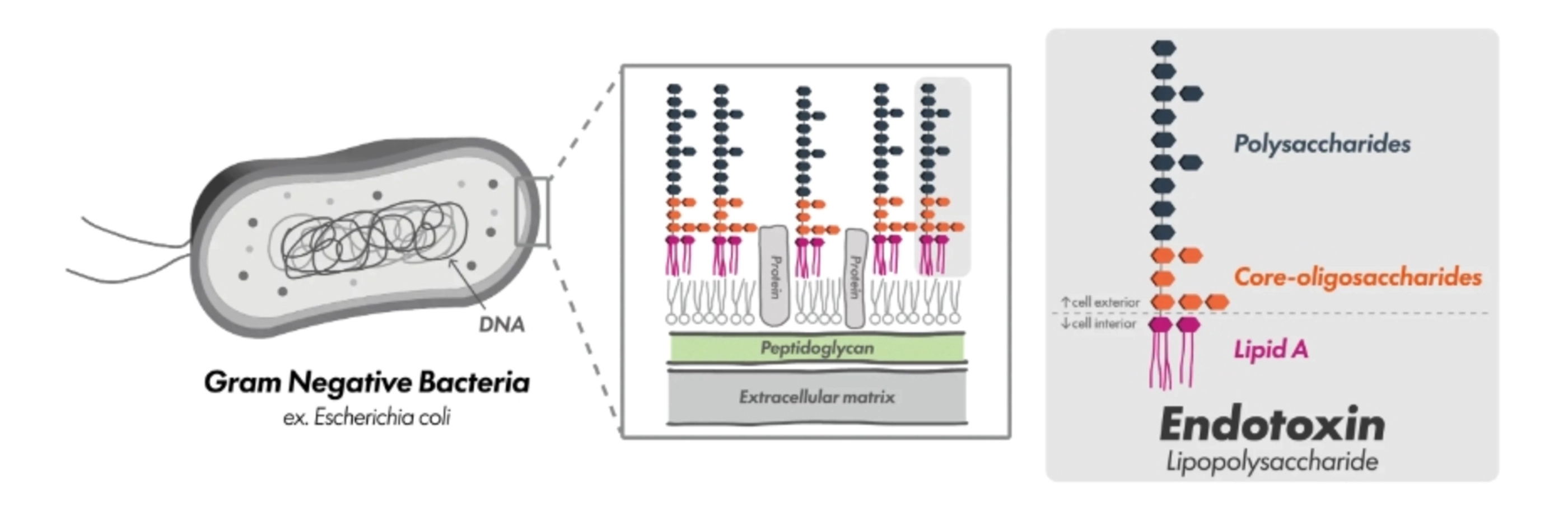
Endotoxin is a lipopolysaccharide found in the outer membrane of Gram-negative bacteria. Once it enters the body, it can cause fever and inflammation. For medical devices and regenerative medicine materials, controlling endotoxin contamination and residues is fundamental to safety and quality.
The sodium alginate, gelatin, collagen, and polysaccharides used in advanced surgical devices come from natural, animal, and fermentation sources. They offer strong absorbency, gelation, and biocompatibility, but the endotoxin carried over from the raw materials or during processing needs to be monitored.
Ordinary sterilization does little to reduce endotoxin. Rather than relying on terminal sterilization alone, check endotoxin levels from the raw-material stage and establish control limits appropriate to the intended application.
How Endotoxin Affects Advanced Surgical Devices
Advanced surgical devices—advanced wound dressings, topical hemostats, and adhesion barriers—protect tissue in the surgical field and wound bed, manage exudate and bleeding, and support tissue repair and adhesion prevention.
Because these devices come into contact with sites where the skin or tissue barrier is compromised, the endotoxin carried by the material must be controlled. Endotoxin acts on immune cells such as monocytes and macrophages and can push the inflammatory response well beyond a beneficial level.
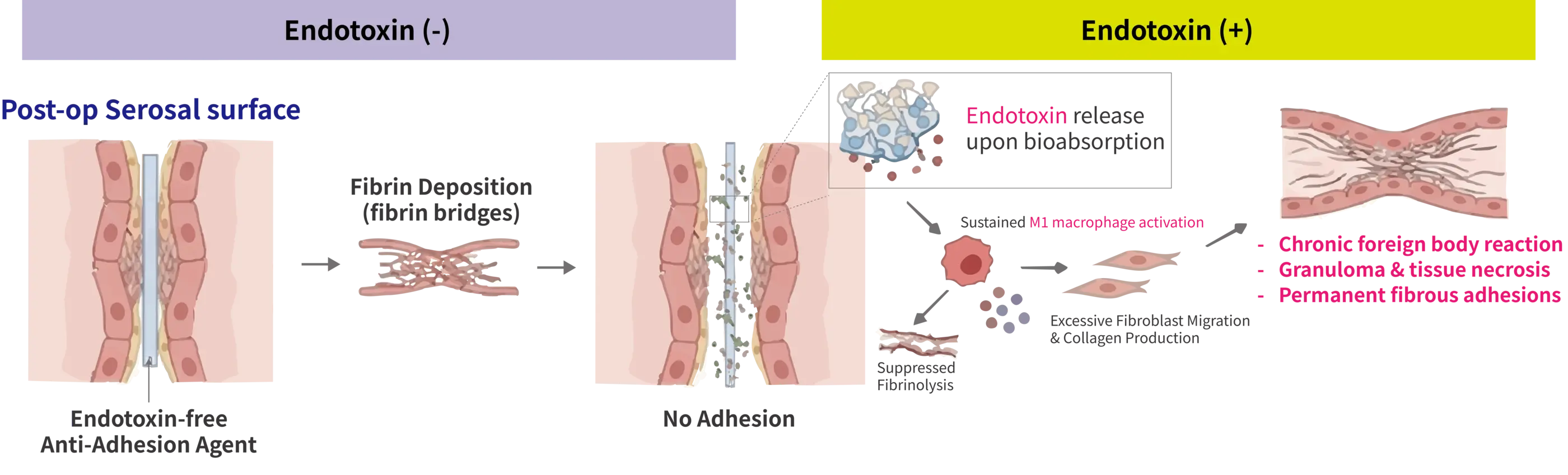
The consequences can include delayed wound healing, prolonged local inflammation, and a degraded environment for tissue repair. With sodium alginate, gelatin, collagen, and polysaccharide materials in particular, raw-material endotoxin levels deserve as much attention as functional performance.
| Evaluation/quality attribute | Technical risks and effects of endotoxin contamination |
|---|---|
| Inflammatory response | Overstimulation of the immune system via the TLR4/NF-κB signaling pathway, increasing cytokine-driven inflammation at the application site. |
| Wound healing | Delayed normal tissue repair and healing, driven in part by M1 polarization of macrophages under prolonged, excessive inflammatory stimulation. |
| Cell and animal studies | False-positive results in biocompatibility assays (in vitro and in vivo), where an immune response to impurities is mistaken for a property of the material itself. |
| Lot-to-lot variability | Reduced reproducibility of evaluation data and inconsistent product quality caused by fluctuating endotoxin levels between raw material lots. |
| Quality assurance risk | The need to manage risk from the raw-material stage to meet regulatory expectations for implanted and applied devices, including biological safety evaluation. |
Normal tissue repair proceeds through inflammatory, proliferative, and maturation phases, and early inflammation is a necessary part of healing. When endotoxin keeps that inflammatory stimulus at an excessive level, however, it disrupts the healing environment and can impair tissue regeneration.
For materials used in advanced surgical devices, the choice should therefore favor raw materials in which trace impurities such as endotoxin are controlled—not simply materials that deliver absorbency, gelation, and biocompatibility.
Preventing Endotoxin Contamination in Development and Manufacturing
No single endotoxin limit is prescribed for every step of advanced surgical device manufacturing. Instead, every stage—raw-material selection, manufacturing, evaluation, and supplier management—needs to be designed with contamination risk in mind.
| Stage | Main causes of contamination or increase | Control points |
|---|---|---|
| Raw material | Naturally derived, animal-derived, and fermentation-derived raw materials; secondary contamination during storage | Selecting a low-endotoxin grade, checking the certificate of analysis for each lot, working backward from the allowable limit |
| Manufacturing process | Process water, tanks and piping, containers, working environment, holding time in the process | Using water-for-injection-grade water, standardizing cleaning conditions such as strong-alkali treatment, minimizing holding time |
| Product design | Contact area, duration of use, elution and degradation, additives and crosslinkers | Risk assessment based on the conditions of use, setting control limits that also cover ancillary materials |
| Evaluation and testing | Test interference caused by the material's viscosity or components | Establishing sampling protocols, confirming dilution factors and pH conditions, spike-recovery testing |
Raw Materials
Sodium alginate, gelatin, collagen, and polysaccharides are derived from natural, animal, or fermentation sources, making endotoxin verification at the raw-material stage essential.
Typical measures include:
Selecting raw materials in a low-endotoxin grade
Checking the certificate of analysis for each raw-material lot
Confirming the material's origin, purification method, and storage conditions to prevent secondary contamination
Working backward from the amount used in the finished product to derive the allowable upper endotoxin limit for each raw material
Manufacturing Process
During manufacturing, recontamination from process water, equipment, containers, and the working environment must be prevented. Sterilization is intended to kill microorganisms; it does not remove endotoxin.
In practice, this means:
Controlling endotoxin levels in the process water used to dissolve and wash raw materials, such as water-for-injection-grade water
Standardizing endotoxin inactivation and cleaning procedures—for example, using strong alkali to clean tanks, piping, and mixers
Minimizing the time between raw-material dissolution and forming and drying
Preventing recontamination during drying, storage, and packaging
Keeping endotoxin out at every step before sterilization
Product Design
During the design stage, endotoxin control targets are set based on contact area with the wound site, duration of use—including elution and in vivo degradation—and replacement frequency. For products that absorb exudate or gel to adhere to the wound surface, material elution and degradation also need to be taken into account.
Typical considerations include:
Assessing risk based on contact area, duration of use, and replacement frequency
Assessing the risk posed by eluted components and degradation products
Controlling endotoxin levels in additives, crosslinkers, and drug carriers, as well as in the main component
Setting allowable endotoxin levels based on the amount of each raw material in the formulation
Evaluation and Testing
The first decision is where to test—raw material, intermediate, or finished product. When performing limulus amebocyte lysate assays, watch for test interference caused by the material's viscosity or components.
Practical steps include:
Establishing appropriate sampling protocols for raw materials, prototypes, and finished products
Confirming suitable dilution factors, optimal pH, and signal extraction conditions for the material being tested
Verifying assay accuracy through spike-recovery testing
What to Check When Selecting a Supplier
Supplier selection should focus on how well the supplier controls endotoxin, not just on material performance and price. Agreeing on a control strategy early in development helps maintain consistent quality as production scales up.
Points worth confirming:
Availability of a low-endotoxin grade
‐ Is the risk of cross-contamination from industrial- or food-grade production lines structurally and physically eliminated?
Specification values, test methods, and units of measurement
‐ Is a clear endotoxin specification in place?
Certificates of analysis by lot
‐ Is low-endotoxin material produced consistently?
Control of process water, cleaning procedures, and storage conditions
‐ Are endotoxin levels in process water, such as water-for-injection-grade water, controlled?
‐ Is piping and production equipment cleaned using standard procedures—for example, strong-alkali treatment—to destroy and remove endotoxin?
Supply reliability and notification procedures for specification changes
‐ Is a stable long-term supply assured?
Nagase ChemteX Low-Endotoxin Materials for Advanced Surgical Devices
When evaluating materials for advanced surgical devices—advanced wound dressings, topical absorbable hemostats, and surgical adhesion barriers—endotoxin control at the raw-material stage is as important as absorbency, gelation, water retention, and processability.
Nagase ChemteX offers the Arcofeliz™ series of low-endotoxin materials, in which endotoxin content is tightly controlled, for sensitive biomedical evaluation and the development of implantable devices.
| Material | Main specifications and characteristics |
|---|---|
| Low-endotoxin sodium alginate(Arcofeliz™ AL) |
Viscosity grades: 1–1200 mPa·s M/G ratio - ST: Standard type (M/G ≈ 1.0) - HM: M-rich type (M/G ≥ 1.5) - HG: G-rich type (M/G ≤ 0.8) |
| Low-endotoxin gelatin (Arcofeliz™ GE) |
Raw material grade: Porcine-, Bovine-, or Fish-derived Jelly strength: ≥250 g |
| Low-endotoxin collagen peptide(Arcofeliz™ CP) |
Raw material grade: Porcine-, Bovine-, or Fish-derived Low molecular weight, non-gelling |
| Low-endotoxin pullulan (Arcofeliz™ PU) |
Neutral polysaccharide from microbial fermentation Water-soluble, adhesive, coat able, lubricious |
| Low-endotoxin xanthan gum (Arcofeliz™ XA) |
Polysaccharide from microbial fermentation Water-soluble, pseudoplastic fluid |
Low-Endotoxin Sodium Alginate (Arcofeliz™ AL)

Arcofeliz™ AL is a sodium alginate produced under low-endotoxin control for use in advanced wound dressings and hydrogel materials.
It is available as a standard type at M/G ≈ 1.0, a G-rich type at M/G ≤ 0.8, and an M-rich type at M/G ≥ 1.5, with a choice of viscosity grades. This allows precise molecular design and material selection to match the exudate volume of the target wound and the gel strength, viscosity, and handling characteristics required of the device.
Related page: Arcofeliz™ AL series
Low-Endotoxin Gelatin (Arcofeliz™ GE)

Arcofeliz™ GE is a gelatin produced under low-endotoxin control, making it well suited for topical absorbable hemostats and biodegradable scaffolds.
Porcine-, bovine-, and fish-derived grades are available, all with a jelly strength of ≥250 g. Microbial residues such as endotoxin—a concern for implanted materials—are reduced to the lowest practical level, supporting the development of products that meet the intended in vivo absorption profile, molecular weight, and mechanical strength.
Related page: Arcofeliz™ GE series
Low-Endotoxin Collagen Peptide (Arcofeliz™ CP)

Arcofeliz™ CP is a collagen peptide produced under low-endotoxin control for reproducing the ECM environment and for use as a component in hybrid materials.
Porcine-, bovine-, and fish-derived grades are available. Its high solubility, formulation stability, and low molecular weight allow it to be used in high-performance surgical composite materials without compromising the physicochemical properties of other polysaccharides or hydrogel bases.
Related page: Arcofeliz™ CP series
Low-Endotoxin Pullulan (Arcofeliz™ PU)

Arcofeliz™ PU is a pullulan produced under low-endotoxin control for thin-membrane designs in surgical adhesion barriers and medical coatings.
Although it is a neutral polysaccharide produced by microbial fermentation, it is highly depyrogenated. Its film-forming ability, tissue adherence, coat ability, and lubricity provide considerable freedom in formulation design.
Related page: Arcofeliz™ PU series
Low-Endotoxin Xanthan Gum (Arcofeliz™ XA)

Arcofeliz™ XA is a low-endotoxin xanthan gum that imparts pseudoplastic (thixotropic) flow behavior.
It is also useful for stabilizing the form and formulation of advanced surgical devices—for example, by improving the spread ability of hemostatic sprays or preventing runoff in locally injected gels.
Related page: Arcofeliz™ XA series
Endotoxin Removal Solutions for Your Materials
For materials used in advanced surgical devices that come into contact with or are implanted directly in the surgical field and wound tissue, endotoxin control from the raw-material stage is essential. Nagase ChemteX supplies materials for medical device and pharmaceutical applications that have reduced endotoxin levels while retaining their inherent polymer properties.
Beyond supplying low-endotoxin raw materials, we also offer the NEA series of endotoxin removal columns and a contract service for removing endotoxin from raw and starting materials.
Please contact us if you are considering reducing endotoxin in a material you already use or want to identify removal conditions suited to a specific material.
Endotoxin Removal Columns NEA Series

Lab- to pilot-scale columns use a proprietary, highly selective ligand to absorb and remove endotoxin from neutral polysaccharides and specific protein solutions while preserving material-specific physicochemical properties such as viscosity and molecular weight.
Related page: Endotoxin removal columns NEA series
Endotoxin Feasibility Study Service

This technical service is tailored to the properties of the customer's existing raw material or trial solution, including electrochemical characteristics, isoelectric point, molecular weight distribution, and related properties. It covers screening for an optimal removal process, optimizing the conditions, and carrying out the purification itself.
Related page: Endotoxin Feasibility Study Service
【References】
Jeffrey, R., et al. (2023). Skin Pharmacology and Physiology, 36(4), 174–185.
Liu, F. (2025). Toxicology Letters, 412, 223–233.
Oshima, R., et al. (2025). Scientific Reports, 15, 20056.
Pleszczyńska, M., et al. (2023). International Journal of Molecular Sciences, 24(5), 4740.
Teixeira, M. O., et al. (2023). Journal of Drug Delivery Science and Technology, 89, 105066.
U.S. Food and Drug Administration. (1985). Bacterial Endotoxins/Pyrogens. Inspection Technical Guide No. 40.
Wu, Z., et al. (2016). Scientific Reports, 6, 24474.
- 【Important Notice Regarding the Pharmaceuticals and Medical Devices Act】
- Scope of this technology: The products and technologies described in this article are raw materials and processing technologies used in the manufacture of pharmaceuticals and medical devices or in research and development. They do not guarantee the efficacy or safety of any finished product, including pharmaceuticals.
- About Arcofeliz™: The Arcofeliz™ series consists of materials intended for use as pharmaceutical excipients and medical device raw materials. On their own, they are not pharmaceuticals intended for the diagnosis, treatment, or prevention of disease.
- Quality specifications: Terms such as "low endotoxin" describe physicochemical characteristics based on each product's specification values and do not claim any clinical effect.
Related Products
Arcofeliz™ AL series: Low-Endotoxin Sodium Alginate
Arcofeliz ™ AL Series is a low-endotoxin sodium alginate produced by purification with a newly developed endotoxin removal materials.
Learn More
Arcofeliz ™ XA series: Low-Endotoxin Xanthan Gum
Arcofeliz ™ XA Series is a low-endotoxin xanthan gum produced by purification with a newly developed endotoxin removal materials.
Learn More
Arcofeliz ™ PU-10: Low-Endotoxin Pullulan
Arcofeliz ™ PU-10 is a low-endotoxin pullulan produced by purification with a newly developed endotoxin removal materials.
Learn More
Arcofeliz ™ GE series: Low-Endotoxin Gelatin
Arcofeliz ™ GE Series is a low-endotoxin gelatin produced by purification with a newly developed endotoxin removal materials.
Learn More
Arcofeliz ™ CP series: Low-Endotoxin Collagen Peptide
Arcofeliz ™ CP Series is a low-endotoxin collagen peptide produced by purification with a newly developed endotoxin removal materials.
Learn More
Arcofeliz ™ EN series: Low-Endotoxin Enzyme
Arcofeliz ™ EN Series is a low-endotoxin enzyme produced by purification with a newly developed endotoxin removal materials.
Learn More
Endotoxin Feasibility Study Service
Tailored endotoxin removal service for medical biomaterials using Nagase ChemteX technology.
Learn MoreWe’re Here to Help
Complete the following fields with your information, as well as a short, detailed description of your request and a NAGASE Specialist will be in touch with you shortly.