










Biomass SAP: High-Performance Biodegradable Superabsorbent Polymer (SAP) — Redefining Sustainability in Hygiene Products—
March 26, 2026
Next-generation starch-based SAP for feminine hygiene, light incontinence pads, and baby diapers.
Enable natural-origin, biodegradable, and circular product designs. Discover Biomass SAP: Precision-engineered in Japan.

The Sustainability Paradox: Why Material Selection is Getting Harder.

You aim for brand sustainability.
You prioritize consumer well-being.
Yet, the core absorbent component remains tethered to petroleum-based legacy materials.
Does your product narrative feel incomplete?
Claiming "skin-friendly" benefits without a traceable material origin?
Promoting "eco-friendly" values while ignoring the product's end-of-life impact?
As an engineer, that misalignment is your intuition telling you there's a better way.
What Leading Hygiene Brands Have in Common Today
Materials are the Narrative.
Moving beyond petroleum dependency means integrating end-of-life lifecycle thinking—like true biodegradability—into the initial R&D phase.
Sustainability is no longer a marketing claim; it is the core engineering ethics of your brand.
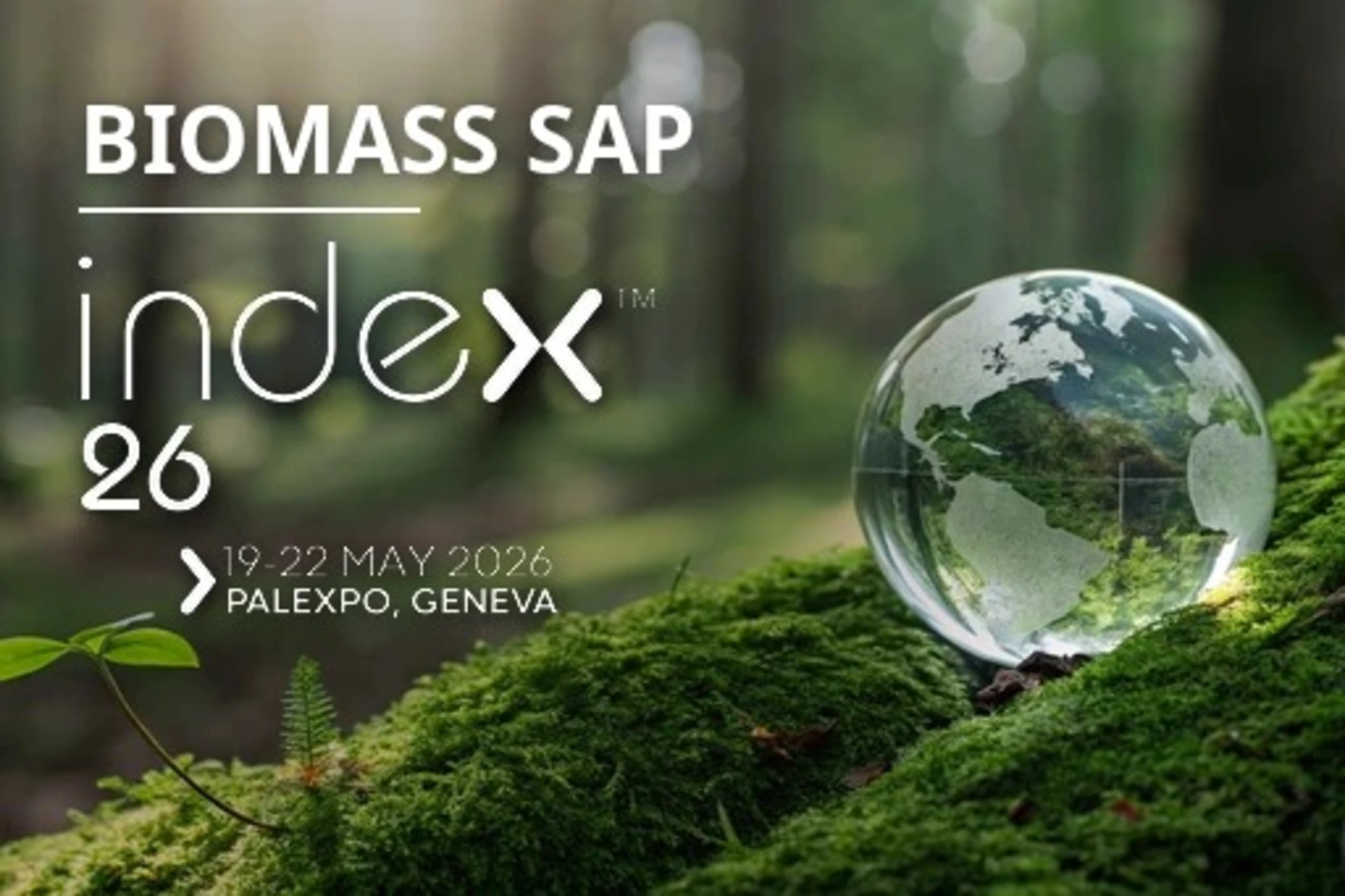
Biomass SAP @ INDEX 26
Biomass SAP arrives in Geneva — a starch-based, biodegradable super absorbent polymer engineered to replace petroleum-based SAP in sanitary pads and light incontinence products, without compromising performance.
Engineered for Sustainability. Designed for Performance.
Available for material sampling, collaborative R&D, and Proof of Concept (PoC) development.
Key Advantages of Biomass SAP
Material Innovation Drives Design Evolution: High Performance Meets Environmental Responsibility.

By utilizing starch-based biomass, you eliminate reliance on traditional petroleum-derived SAP. This isn't just a swap; it's a shift to a design that allows you to quantify and communicate your product's environmental integrity.

Biomass SAP allows for material strategies focused on biodegradability. Reduce the environmental footprint at the core absorbent level, aligning your product with global ESG standards.

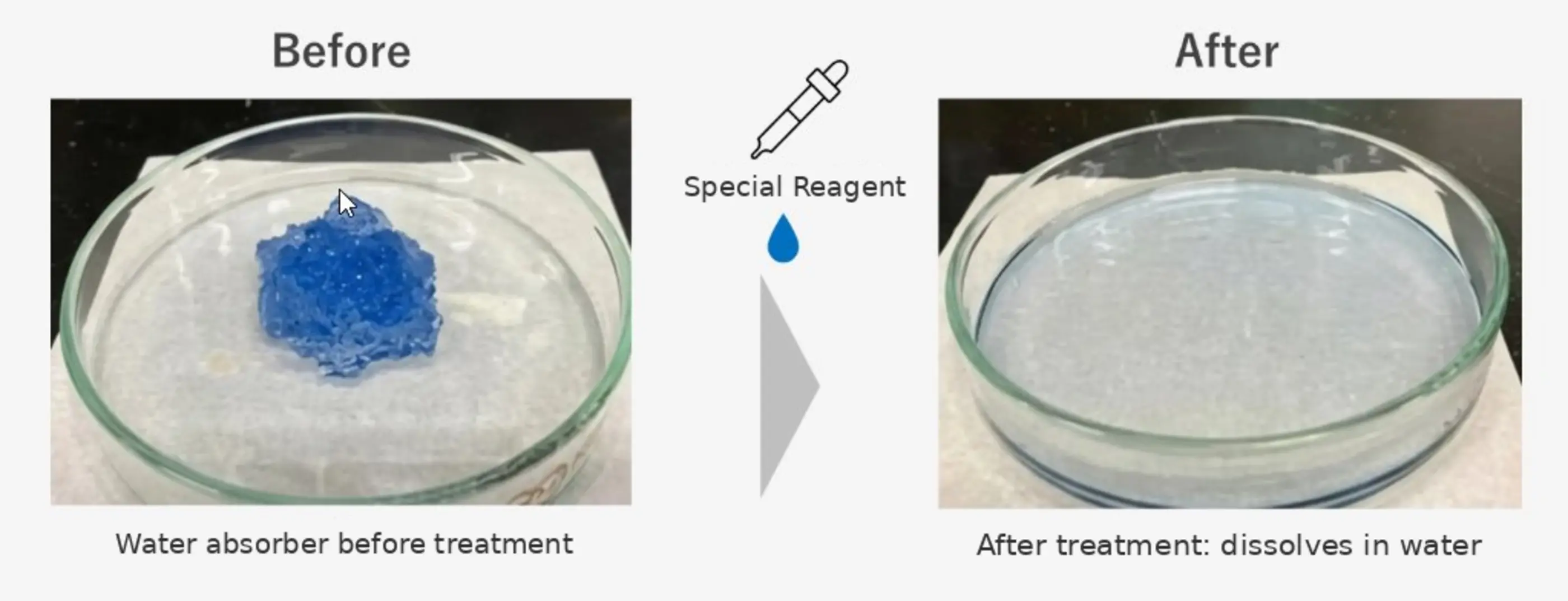
Leverage unique material properties to develop flushable solutions or structural designs optimized for sorting and high-efficiency recycling.
*Degradation rates and conditions are subject to final product architecture and environmental factors.
*Technical feasibility depends on specific product configuration and design parameters.
Leading the Market in Biodegradable Absorption Capacity
Biomass SAP eliminates the performance gap inherent in first-generation bio-SAPs.
With a saline retention capacity of 45g/g, it delivers industry-leading performance for sustainable absorbent materials.
Comparative Analysis: Biomass SAP vs. Conventional Bio-SAP & Polyacrylate SAP
Saline Absorption & Retention Metrics
- Free Swell Capacity: Saline absorption per 1g of SAP [JIS K 7223-1996].
- Retention Capacity: Fluid retained after centrifugal dehydration at 150G for 90 seconds.
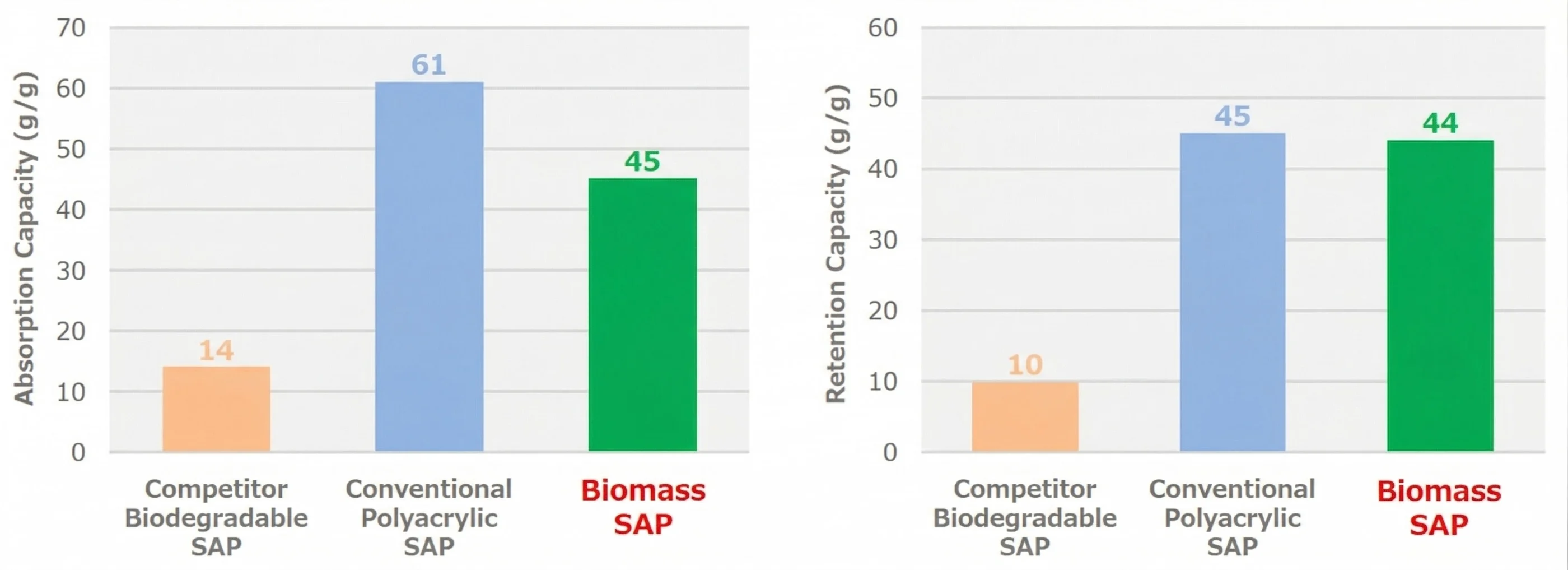
*All physical properties and data provided are reference values based on current testing. They are not guaranteed specifications and are subject to change without notice.
Advanced Applications: Material-Driven Circular Architecture
Enable innovative end-of-life pathways, including flushable designs and high-efficiency recycling systems, by optimizing material characteristics.
*Feasibility is dependent on final product design and assembly.
Ideal for Brand Applications Focused on:
- Femtech & Femcare: Starch-based alternatives for 'non-polymer' product positioning.
- Well-being & Incontinence: Premium care solutions with a sustainability edge.
- Sustainable D2C: Direct-to-consumer brands prioritizing ethical sourcing.
- Crowdfunding Innovations: Projects requiring high-impact, story-driven material science.

Precision Manufacturing & Quality Assurance (Japan)

Biomass SAP is designed and manufactured in Japan under rigorous quality control standards, specifically optimized for the feminine care and light incontinence markets.
We partner with brand owners to translate vision into technically superior, sustainable product realities.
Engineered for Sustainability. Designed for Performance.
Available for material sampling, collaborative R&D, and Proof of Concept (PoC) development.
We’re Here to Help
Complete the following fields with your information, as well as a short, detailed description of your request and a NAGASE Specialist will be in touch with you shortly.